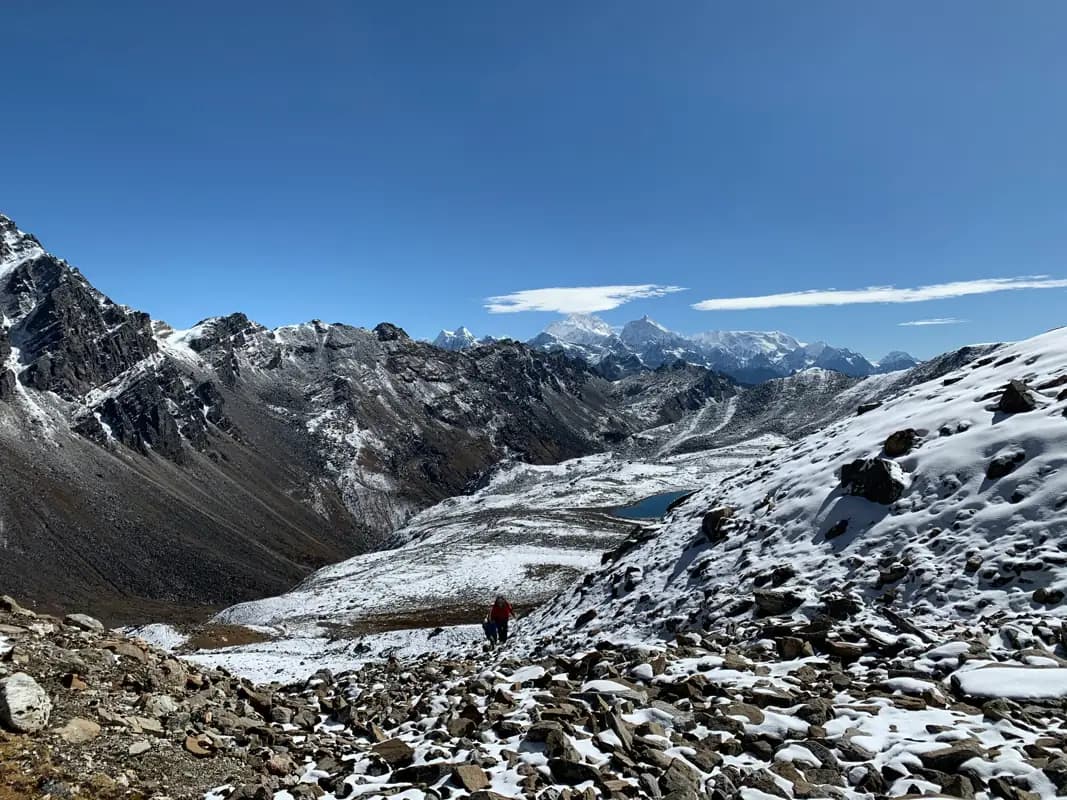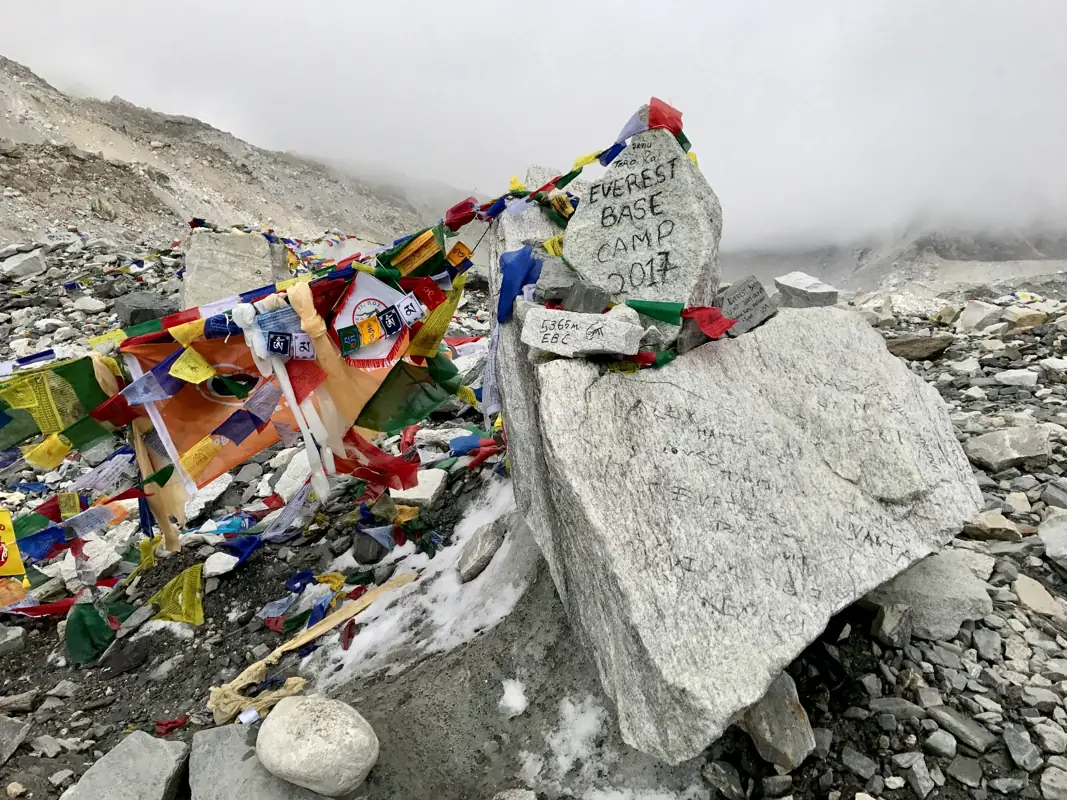
Everest region trekking scenery
πŸ”οΈ 6 Treks

Everest Region Treks

Everest region treks in Nepal's Khumbu: Base Camp, Gokyo, the Three Passes and gentler routes, with altitudes, permits and the best months to go.

πŸ₯Ύ
Treks
6
πŸ”οΈ
Max Altitude
5755m
πŸ“Š
Difficulty
Easy to Extreme
πŸ“…
Duration
5–18 days
πŸ“
Permits
Restricted area

Treks in Everest

Everest Base Camp Trek
Everest Regionhard

Everest Base Camp Trek

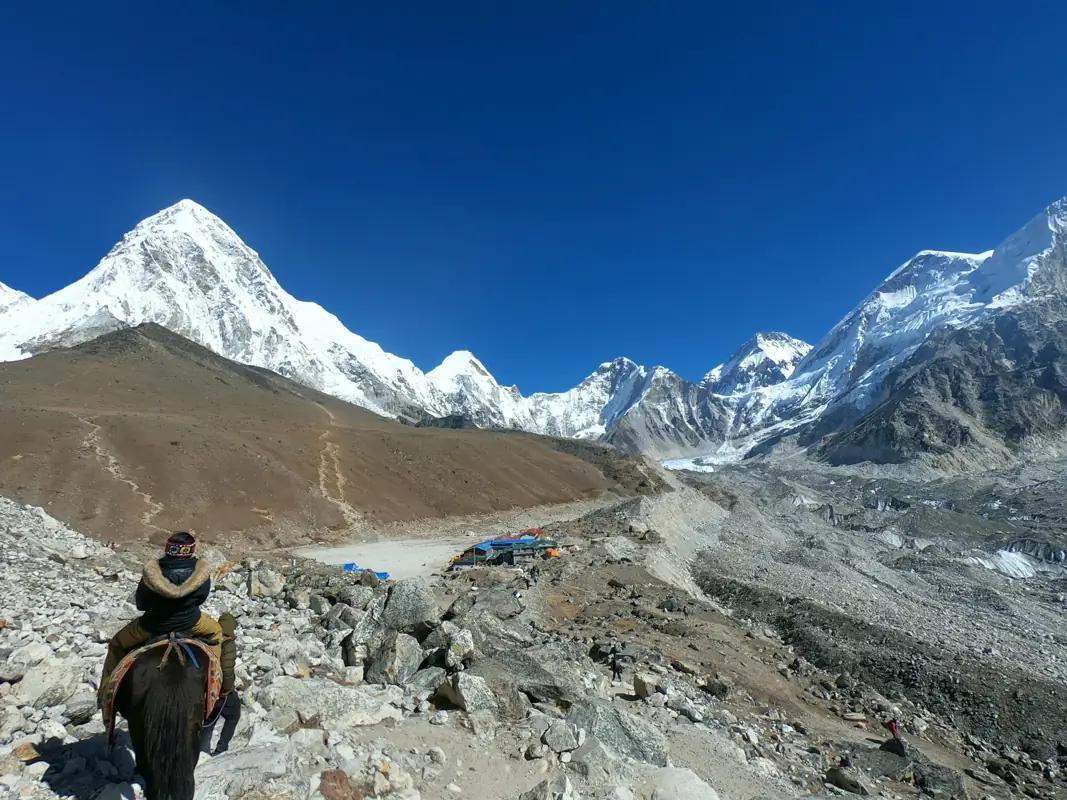
The Everest Base Camp Trek follows the Dudh Koshi valley from Lukla into the high Khumbu, climbing over roughly ten days to the foot of the Khumbu Icefall at about 5,364 m. Most people also climb Kala Patthar, a rocky viewpoint above Gorak Shep, for a closer look at Everest than base camp itself allows. The route passes through Sherpa villages, monasteries and suspension bridges strung with prayer flags. Namche Bazaar is the trading hub of the region, Tengboche has the area's best-known monastery, and above Dingboche the landscape opens into moraine and glacier with Ama Dablam, Lhotse and Nuptse close by. Days are rarely long in distance but the altitude sets the pace. The itinerary builds in two acclimatisation days, and most walking finishes by early afternoon, leaving time to rest and adjust. Nights are spent in teahouses: simple lodges with shared dining rooms heated by a stove, and rooms that get colder the higher you go. You don't need climbing experience, but you do need good fitness, a willingness to walk five to seven hours on consecutive days, and patience with flight delays at Lukla. A licence-verified guide you contact directly can adjust the pace to how your group is acclimatising and handle lodges and permits along the way.

πŸ“– View Details & Itinerary

πŸ“… Duration: 12-14 Days

πŸ”οΈ Max Altitude: 5644m

πŸ“ Permit: Standard Parks

Everest Three Passes Trek
Everest Regionhard

Everest Three Passes Trek

The Everest Three Passes Trek is a long loop through the Khumbu that crosses its three high trekking passes: Kongma La (about 5,535 m), Cho La (about 5,420 m) and Renjo La (about 5,360 m). Along the way it takes in Everest Base Camp, Kala Patthar, the Gokyo Lakes and the quiet Thame valley, so it covers almost every viewpoint the region is known for. Most groups walk it anticlockwise: up to Dingboche and Chhukung, over Kongma La to Lobuche, on to Gorak Shep for base camp and Kala Patthar, west over Cho La to Gokyo, then over Renjo La and down through Thame to Namche Bazaar. Each pass day is long, starts before dawn and can involve snow, ice and loose rock, and Cho La usually crosses a small glacier. This is a trek for people who already have multi-day hiking experience and are comfortable with long, cold days above 5,000 m. The route spends many nights high, so a gradual itinerary and well-placed acclimatisation days matter more than speed. Licence-verified guides you contact directly can advise on the direction to walk, current conditions on the passes and whether crampons or microspikes are needed.

πŸ“– View Details & Itinerary

πŸ“… Duration: 18-22 Days

πŸ”οΈ Max Altitude: 5644m

πŸ“ Permit: Standard Parks

Everest View Trek
Everest Regioneasy

Everest View Trek

The Everest View Trek is the short way into the Khumbu. It follows the same trail as the base camp route from Lukla up the Dudh Koshi valley to Namche Bazaar, then climbs to the ridge above town at Syangboche, where the Hotel Everest View (about 3,880 m) looks up the valley to Everest, Lhotse and Ama Dablam. Most itineraries spend a night in Khumjung or Khunde before turning back down. Because it stays below 4,000 m, the altitude is manageable for most fit walkers, though the climb to Namche is steep and the first night there is often when people feel the height. Days are short, which leaves time to wander Namche's market, visit the monastery in Khumjung and the school Edmund Hillary helped found, and stop at teahouses along the way. It suits travellers with a week to spare, families with older children, and anyone who wants to see the Khumbu and its Sherpa villages without committing to two weeks at high altitude. The flight to Lukla is part of the experience and also its biggest variable: weather delays are common, so it is worth leaving a spare day at the end. Licence-verified guides you contact directly can tell you how they plan around flight delays and acclimatisation.

πŸ“– View Details & Itinerary

πŸ“… Duration: 5-7 Days

πŸ”οΈ Max Altitude: 3880m

πŸ“ Permit: Standard Parks

Gokyo Ri Trek
Everest Regionmoderate

Gokyo Ri Trek

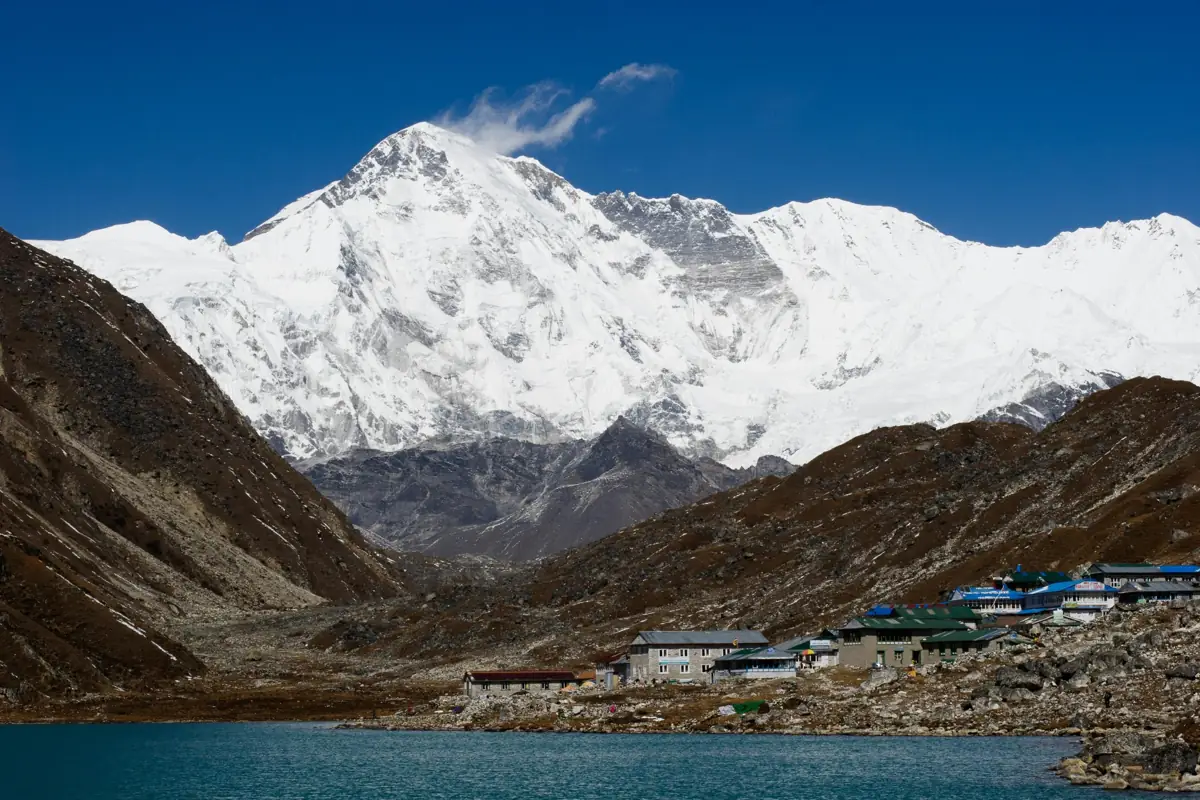
The Gokyo Ri Trek leaves the main Everest Base Camp trail above Namche Bazaar and heads up the quieter Dudh Koshi valley instead, past the villages of Dole and Machhermo to a chain of turquoise glacial lakes at Gokyo. From the lakeside village you climb Gokyo Ri, a 5,357 m viewpoint that looks across the Ngozumpa glacier, the longest in Nepal, to Everest, Lhotse, Makalu and Cho Oyu. The route sees fewer trekkers than the base camp trail, and the lodges in Dole, Machhermo and Gokyo are smaller and more spread out. The scenery changes from rhododendron and pine forest below Dole to open yak pasture and moraine as you gain height, and the lakes themselves are frozen at the edges for much of the season. It suits trekkers who want big Himalayan views without the crowds, and who have time to acclimatise properly: Gokyo sits close to 4,800 m, and the itinerary gains height slowly for that reason. Walking days are moderate, usually four to six hours, with one early start for the Gokyo Ri sunrise. Licence-verified guides you contact directly can adjust the pace or add the fifth lake and an extra night in Gokyo.

πŸ“– View Details & Itinerary

πŸ“… Duration: 10-12 Days

πŸ”οΈ Max Altitude: 5357m

πŸ“ Permit: Standard Parks

Pikey Peak Trek
Everest Regionmoderate

Pikey Peak Trek

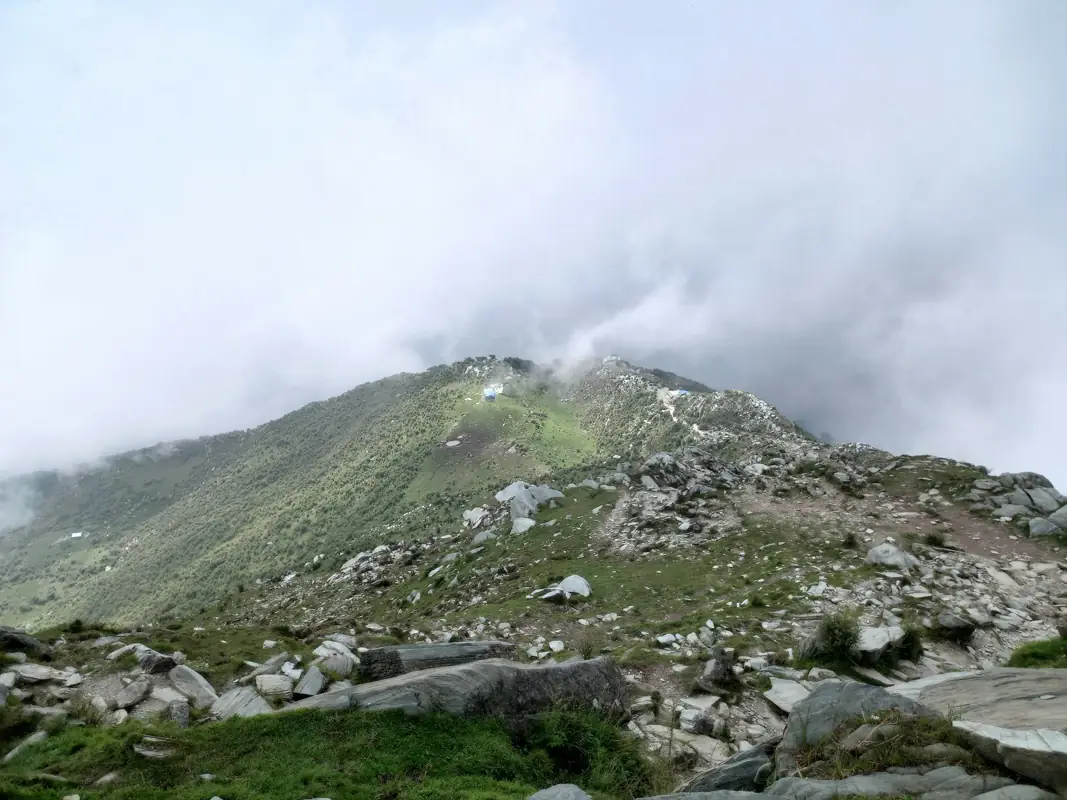
Pikey Peak is a 4,065 m hill in the lower Solukhumbu district, south-west of the Everest region, known for a long view of the eastern Himalaya: Everest, Lhotse, Makalu, Kanchenjunga and the Numbur range on a clear morning. The peak is sacred to the local Sherpa community, and its summit is strung with prayer flags. The trek reaches it without a flight to Lukla. A road from Kathmandu runs to Dhap, and from there the route climbs through rhododendron and pine forest, yak pastures and small settlements to the base of the peak, then descends via Junbesi, a Sherpa village with an old monastery, before returning by road from Phaplu or Salleri. Lodges are simpler and fewer than in the Khumbu, and some are seasonal. It suits trekkers with a week who want Himalayan panoramas and village culture away from the busy Everest trail, and anyone wary of mountain flights. The altitude is moderate, so a careful pace is still wise near the top. Licence-verified guides you contact directly can tell you which lodges are open and plan the timing for the summit sunrise.

πŸ“– View Details & Itinerary

πŸ“… Duration: 7-9 Days

πŸ”οΈ Max Altitude: 4065m

πŸ“ Permit: Standard Parks

Tashi Lapcha Pass Trek
Everest Regionextreme

Tashi Lapcha Pass Trek

The Tashi Lapcha Pass Trek links the remote Rolwaling valley, west of the Everest region, with the Khumbu. It follows the Rolwaling Khola past Beding and Na to the glacial lake Tsho Rolpa, then climbs the Trakarding and Drolambao glaciers to the Tashi Lapcha (about 5,755 m) before descending to Thame and Namche Bazaar. This is not a teahouse trek. Above Na there are no lodges, so nights are spent in tents, and the pass itself involves glacier travel, crevasses and rockfall-prone sections that usually need crampons, ropes and a guide with mountaineering experience. Weather can close the pass for days. The lower valley is the reward for the effort: Gauri Shankar rises above Simigaon, Beding's monastery sits among stone houses, and Tsho Rolpa spreads below the Trakarding glacier. Because Rolwaling is a restricted area, the trek is arranged through a registered agency, and the crossing usually takes about two weeks with a spare day for weather. It suits trekkers who have already done high-altitude routes and want a quiet, demanding traverse rather than a well-trodden trail. Expect long, cold days, a careful acclimatisation schedule and a team carrying camping and climbing equipment. Licence-verified guides you contact directly can tell you how they run the crossing and what experience they ask for.

πŸ“– View Details & Itinerary

πŸ“… Duration: 16-20 Days

πŸ”οΈ Max Altitude: 5755m

πŸ“ Permit: Restricted (β‰ˆ US$90 in permits)

Find a licensed guide who works in the Everest region and arrange your trek with them directly.

Trekking in the Everest region

The Everest region, known locally as the Khumbu, is the high valley system south of the world's highest mountain, Mount Everest (8,848.86 m), a height Nepal and China announced jointly in December 2020. Most of it lies inside Sagarmatha National Park, established in 1976 and listed by UNESCO as a World Heritage Site in 1979. Four of the world's six highest peaks, Everest, Lhotse (8,516 m), Makalu and Cho Oyu (8,188 m), can be seen from its ridges.

Almost every trek starts with the short flight to Lukla (2,846 m). In the busy spring and autumn seasons many Lukla flights leave from Manthali in Ramechhap, about five hours by road from Kathmandu, rather than from Kathmandu itself, so check where your ticket departs. From Lukla the trail climbs to Namche Bazaar (3,440 m), the region's market town and the usual first acclimatisation stop.

Which Everest trek suits you

  • Everest Base Camp is the classic: about two weeks via Tengboche monastery, Dingboche and Gorak Shep, with the sunrise climb of Kala Patthar for the best view of Everest itself.
  • Gokyo Ri swaps the base camp for the turquoise Gokyo lakes and a summit view many trekkers rate higher than Kala Patthar's.
  • Everest Three Passes links Kongma La, Cho La and Renjo La in a loop of around three weeks, for fit trekkers comfortable on snow.
  • Everest View stays below 4,000 m: a few days to Namche and Tengboche for the mountain views without the high-altitude risk.
  • Pikey Peak lies in lower Solukhumbu, off the main trail, and is reached by road rather than by the Lukla flight.
  • Tashi Lapcha Pass crosses from Rolwaling into the Khumbu over a glaciated pass and is an expedition-style route for experienced parties only.

Altitude and pacing

The main Everest treks spend several nights above 4,000 m and reach over 5,000 m, so the itineraries on each trek page build in rest days at Namche and Dingboche. The elevation chart on every trek page shows where each night is spent. Climb slowly, and descend if symptoms of altitude sickness get worse.

Permits and guides

The Everest trails are not a restricted area. Trekkers pay the Sagarmatha National Park entry fee and the Khumbu Pasang Lhamu Rural Municipality's own entry fee; the trek pages show the totals in rupees. The Nepal Tourism Board lists the Everest routes among those that need a licensed guide, but the local municipality has not applied that rule, so independent trekking still happens here. Tashi Lapcha is the exception: the Rolwaling side is restricted and needs a special permit. Our guide to who needs a trekking guide explains the stand-off.

Everest Trekking FAQ

How many treks are in the Everest region?

xTrekka currently features 6 treks in the Everest region, ranging from 5–18 days in length and reaching up to 5,755 m.

How difficult are Everest treks?

Everest treks range across easy to extreme difficulty. Each trek page lists its difficulty grade, max altitude and daily itinerary so you can match a route to your experience.

Do I need special permits for Everest?

Only some. Tashi Lapcha Pass Trek enters a restricted area and needs a restricted-area permit through a registered agency with a licensed guide; the other Everest treks use standard park or conservation area permits. Each trek page shows its permit fees in rupees with an approximate dollar figure. See our guide to Nepal trekking permits for every fee and rule.

When is the best time to trek in Everest?

Most Everest treks are best in Mar–May, Oct–Nov. Outside those months, expect monsoon rain from June to September and cold, snow-prone passes in winter. Each trek page shows its own best months. Compare every route in our month-by-month guide to trekking in Nepal.

Plan your Everest trek