Everest Base Camp Trek at a glance
How the grades compare across routes: Nepal trek difficulty grades explained.
Overview
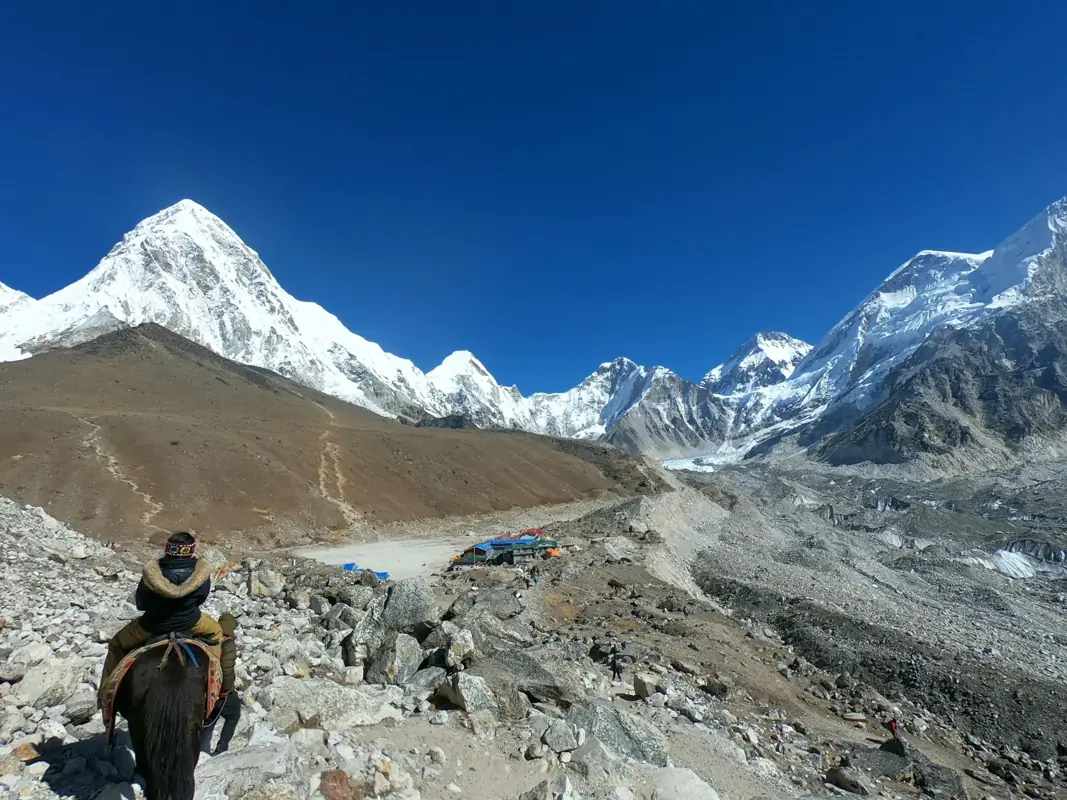
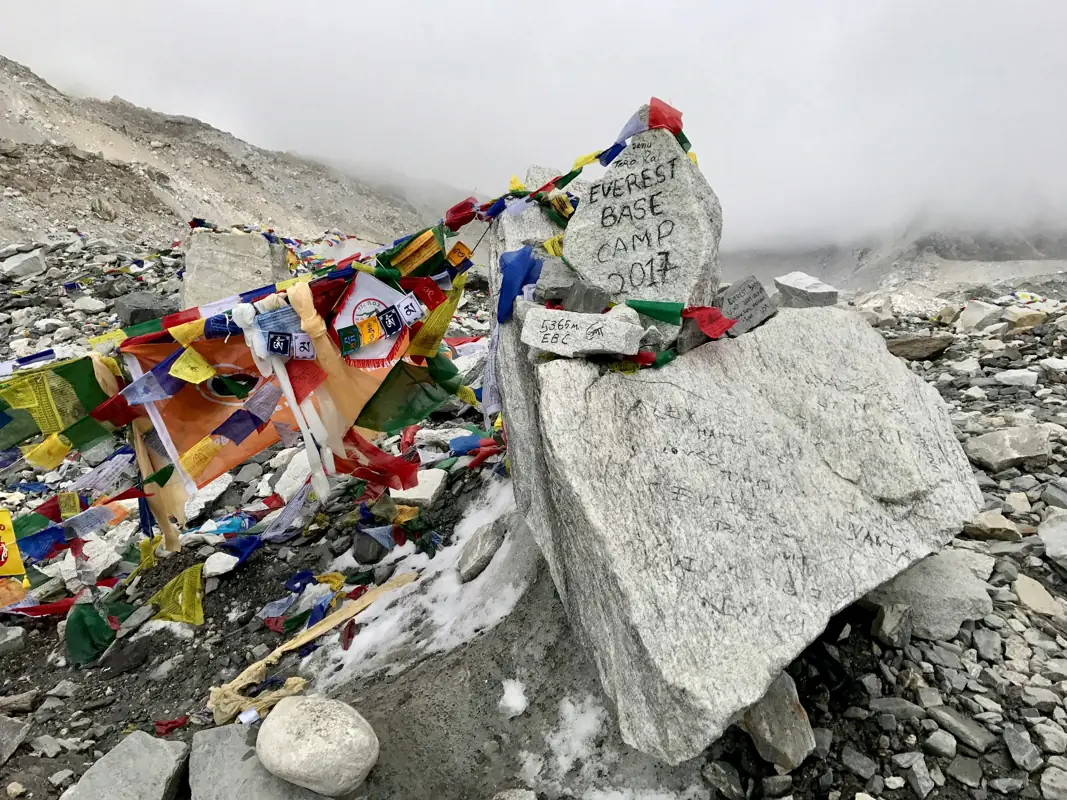
The Everest Base Camp Trek follows the Dudh Koshi valley from Lukla into the high Khumbu, climbing over roughly ten days to the foot of the Khumbu Icefall at about 5,364 m. Most people also climb Kala Patthar, a rocky viewpoint above Gorak Shep, for a closer look at Everest than base camp itself allows.
The route passes through Sherpa villages, monasteries and suspension bridges strung with prayer flags. Namche Bazaar is the trading hub of the region, Tengboche has the area's best-known monastery, and above Dingboche the landscape opens into moraine and glacier with Ama Dablam, Lhotse and Nuptse close by.
Days are rarely long in distance but the altitude sets the pace. The itinerary builds in two acclimatisation days, and most walking finishes by early afternoon, leaving time to rest and adjust. Nights are spent in teahouses: simple lodges with shared dining rooms heated by a stove, and rooms that get colder the higher you go.
You don't need climbing experience, but you do need good fitness, a willingness to walk five to seven hours on consecutive days, and patience with flight delays at Lukla. A licence-verified guide you contact directly can adjust the pace to how your group is acclimatising and handle lodges and permits along the way.
Deciding between routes? Everest Base Camp vs Annapurna Circuit: Which to Choose
🌟 Trail Highlights
- Standing at Everest Base Camp beside the Khumbu Icefall
- Sunrise view of Everest from Kala Patthar
- Namche Bazaar, the Sherpa trading town of the Khumbu
- Tengboche Monastery with Ama Dablam behind it
- The flight into Lukla's mountain airstrip
- Crossing the high suspension bridges over the Dudh Koshi
Everest Base Camp Trek itinerary
- Day 1
Fly to Lukla, trek to Phakding
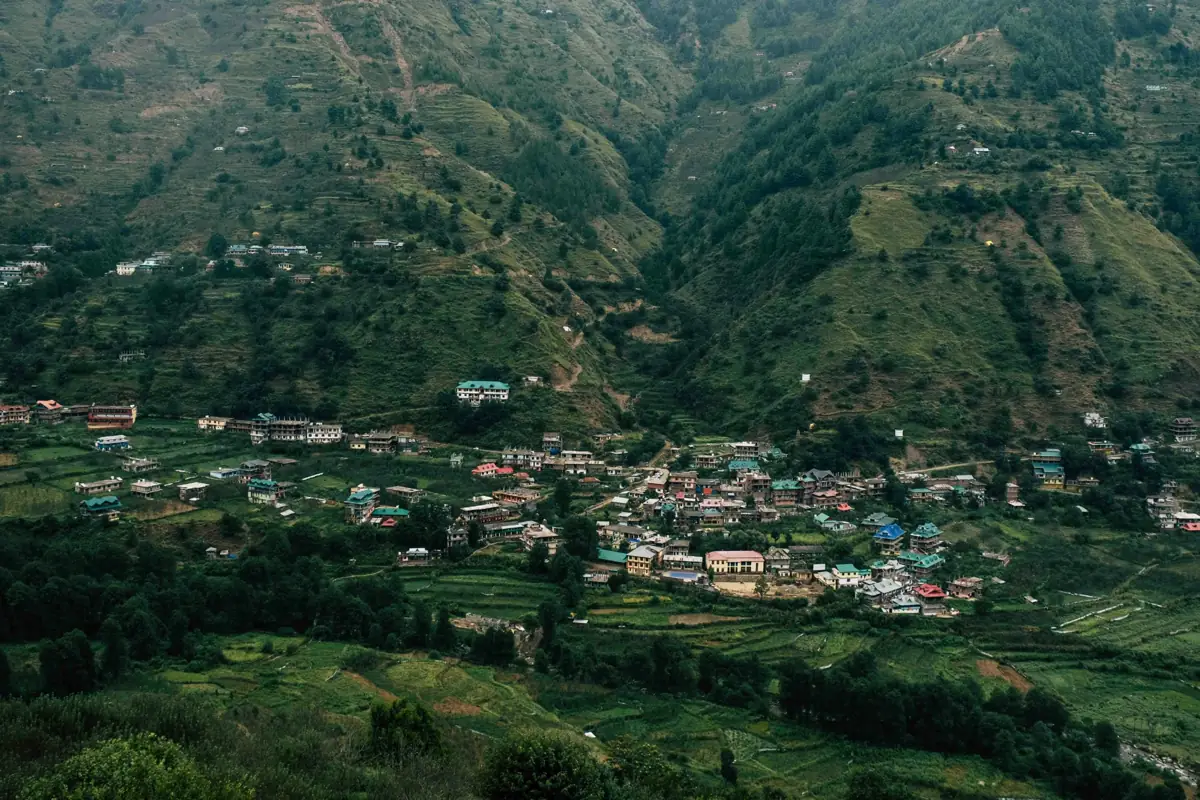
A short morning flight lands at Lukla, where you meet porters and set off down the valley. The first day is an easy descent along the Dudh Koshi to Phakding, a good chance to settle into teahouse life.
- Day 2
Phakding to Namche Bazaar
The trail crosses the river several times on suspension bridges and enters Sagarmatha National Park at Monjo. The day ends with a long, steep climb to Namche Bazaar, with a first glimpse of Everest on a clear day.
- Day 3
Acclimatisation day in Namche
Stay a second night in Namche to help your body adjust. A short hike up to the ridge above town gives wide views of Everest, Lhotse and Ama Dablam before you return to sleep lower.
- Day 4
Namche to Tengboche
A contouring trail with steady mountain views drops to the river at Phunki Tenga, then climbs through forest to Tengboche. Many trekkers visit the monastery in the afternoon.
- Day 5
Tengboche to Dingboche
The trail descends through rhododendron forest to Deboche, crosses the Imja Khola and climbs past Pangboche into the open Imja valley. Dingboche sits among stone-walled fields below Ama Dablam.
- Day 6
Acclimatisation day in Dingboche
A second rest day for altitude. A hike up the ridge behind the village (Nangkartshang) to gain height before returning to sleep in Dingboche is the usual way to spend it.
- Day 7
Dingboche to Lobuche
The route climbs onto a broad plateau to Thukla, then up a steep moraine to the memorials for climbers who died on Everest. Lobuche is a small, cold settlement beside the Khumbu Glacier.
- Day 8
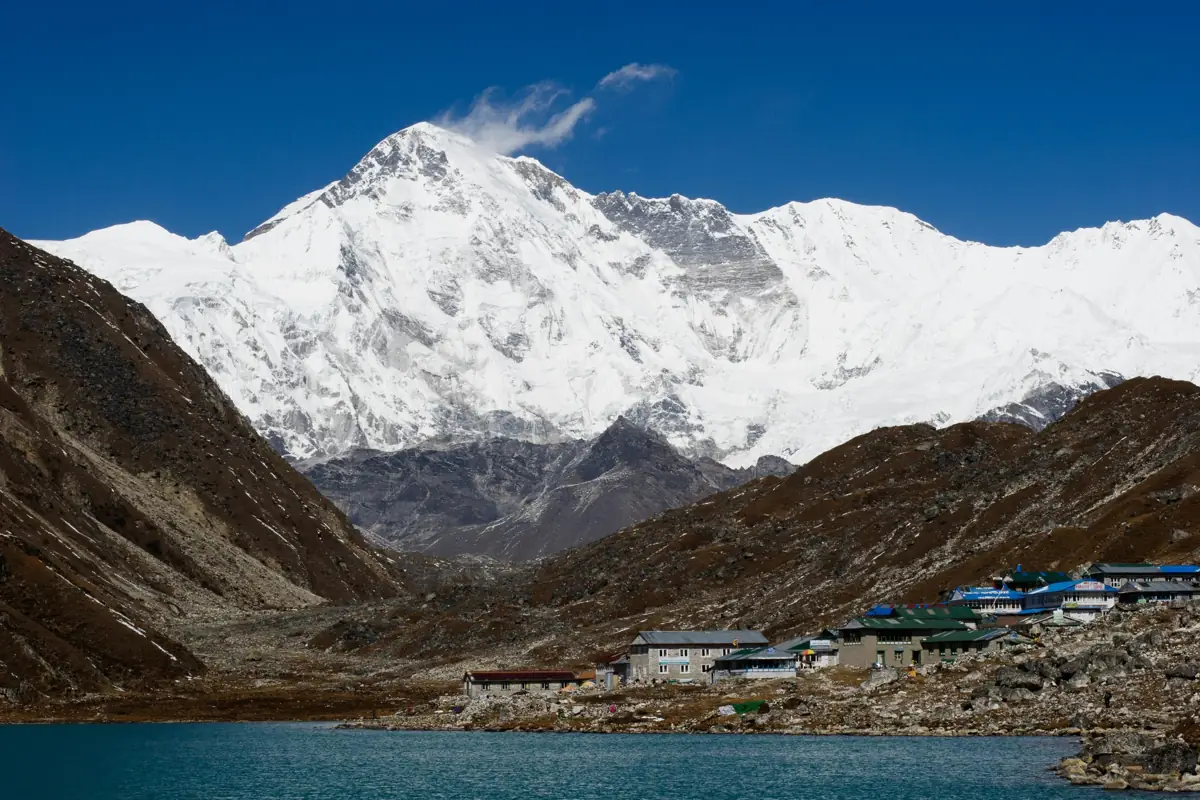
Lobuche to Gorak Shep and Everest Base Camp
Walk along the glacier's edge to Gorak Shep, drop your bags, then continue over rough moraine to base camp. Return to Gorak Shep for the night; this is the longest and highest day so far.
- Day 9
Kala Patthar, descend to Pheriche
An early climb up Kala Patthar gives the closest full view of Everest on the trek. After breakfast at Gorak Shep, descend to Pheriche, where the thicker air makes sleep noticeably easier.
- Day 10
Pheriche to Namche Bazaar
A long descent retraces the route past Pangboche and Tengboche back to Namche. Legs that struggled uphill usually find this day surprisingly quick.
- Day 11
Namche to Lukla
The final trekking day follows the Dudh Koshi back down to Lukla. Most groups celebrate with their guide and porters that evening.
- Day 12
Fly back to Kathmandu
Morning flights return to Kathmandu or Ramechhap, weather permitting. Keep at least one spare day in your plans in case clouds ground the flights.
This trek climbs above 3,000 m, where the pace of the climb matters. See our guide to altitude sickness on Nepal treks for how to prevent, spot and respond to it.
Best time to trek
The best months for the Everest Base Camp Trek are Mar–May, Oct–Nov.
- Jan
- Feb
- Mar
- Apr
- May
- Jun
- Jul
- Aug
- Sep
- Oct
- Nov
- Dec
How does it compare with other routes? See our month-by-month guide to trekking in Nepal.
Permits & costs
- Permit & park fees
- NPR 8,000 per person (≈ US$52)
- Guide day rates
- $25–$40 per day, set by the guides below
- Sagarmatha National Park entry permit: NPR 3,000 (about USD 19), issued at the Nepal Tourism Board office in Kathmandu or at the park entrance in Monjo.
- Khumbu Pasang Lhamu Rural Municipality fee: NPR 3,000 (about USD 19) for most foreign nationals (NPR 2,000 for SAARC and Chinese nationals), paid in Lukla or Monjo. The Nepal Tourism Board lists the Everest routes among those needing a TIMS card (NPR 2,000, about USD 13) issued through a registered agency with a licensed guide; the Khumbu municipality has disputed the guide rule since 2023, so confirm what is being checked with your agency.
- Carry your passport and copies; permits are checked at Lukla, Monjo and other checkpoints.
Fees change; confirm current rates before you travel.
Every fee and rule, trek by trek: our guide to Nepal trekking permits. Which routes need a licensed guide: do you need a guide to trek in Nepal? What a day rate covers, tips and flights: how much a trekking guide costs in Nepal.
Getting there & back
Most trekkers fly from Kathmandu to Lukla, a flight of about 35 minutes. In the busy spring and autumn seasons many flights leave from Manthali (Ramechhap) instead, a 4–5 hour drive from Kathmandu. Mountain weather regularly delays flights in both directions, so plan one or two spare days at the end of the trip.
Everest Base Camp Trek FAQs
How hard is the Everest Base Camp Trek?
It is a demanding but non-technical trek. Most days involve 5–7 hours of walking on uneven trails with steady climbs, and the altitude makes everything feel harder above about 4,000 m. If you can comfortably walk several hours on consecutive days and have trained on hills or stairs, you can do it.
How do I avoid altitude sickness on the way to base camp?
Ascend gradually, take the two acclimatisation days in Namche and Dingboche, drink plenty of water and avoid alcohol on the way up. Mild headaches are common; worsening headache, vomiting, confusion or breathlessness at rest are warning signs, and the treatment is to descend. Talk to a travel doctor about medication before you go.
Do I need a guide for this trek?
Since April 2023 Nepal has required foreign trekkers to hire a licensed guide in most trekking areas, but the Khumbu's local municipality has not applied the rule in the same way, so you may still see independent trekkers here. Rules and enforcement can change, so check before you go. Either way, a licensed guide makes acclimatisation decisions, lodge bookings and emergencies far easier at this altitude.
When is the best time to trek to Everest Base Camp?
Spring (March to May) and autumn (October to November) bring the most stable weather and clearest views, and they are also the busiest months. Winter is very cold above Dingboche but quieter, while the summer monsoon brings cloud, rain lower down and frequent flight cancellations.
What are the teahouses like?
Teahouses are family-run lodges with twin rooms, shared toilets and a heated dining room where everyone gathers in the evening. Rooms are basic and unheated, so bring a warm sleeping bag. Menus are similar along the route, with dal bhat, noodles, potatoes and eggs as staples.
Is there Wi-Fi and phone charging on the trek?
Most lodges offer Wi-Fi and device charging for a fee, and the prices rise as you go higher. Mobile signal is available in many villages but unreliable above Dingboche. Carry a power bank and keep batteries warm at night, since cold drains them quickly.
How much should I budget per day on the trail?
Food, hot drinks, showers, charging and Wi-Fi are paid for as you go, and prices increase with altitude because everything is carried up by porters or yaks. Ask your guide for current costs when you plan, and carry enough Nepali rupees in cash, as ATMs end at Namche and are not reliable.
Guides who lead the Everest Base Camp Trek
Every one of them is licence-verified by our compliance team. Open a profile to read about them, then send your dates — they reply to you directly with their own price.