Everest Three Passes Trek at a glance
How the grades compare across routes: Nepal trek difficulty grades explained.
Overview
The Everest Three Passes Trek is a long loop through the Khumbu that crosses its three high trekking passes: Kongma La (about 5,535 m), Cho La (about 5,420 m) and Renjo La (about 5,360 m). Along the way it takes in Everest Base Camp, Kala Patthar, the Gokyo Lakes and the quiet Thame valley, so it covers almost every viewpoint the region is known for.
Most groups walk it anticlockwise: up to Dingboche and Chhukung, over Kongma La to Lobuche, on to Gorak Shep for base camp and Kala Patthar, west over Cho La to Gokyo, then over Renjo La and down through Thame to Namche Bazaar. Each pass day is long, starts before dawn and can involve snow, ice and loose rock, and Cho La usually crosses a small glacier.
This is a trek for people who already have multi-day hiking experience and are comfortable with long, cold days above 5,000 m. The route spends many nights high, so a gradual itinerary and well-placed acclimatisation days matter more than speed. Licence-verified guides you contact directly can advise on the direction to walk, current conditions on the passes and whether crampons or microspikes are needed.
🌟 Trail Highlights
- Crossing Kongma La, Cho La and Renjo La, the Khumbu's three high passes
- Everest Base Camp and sunrise from Kala Patthar
- The Gokyo Lakes and the Ngozumpa glacier
- Views of Everest, Lhotse, Makalu and Cho Oyu from the passes
- The quiet Thame valley on the way back to Namche
- Namche Bazaar and Tengboche Monastery
Everest Three Passes Trek itinerary
- Day 1
Fly to Lukla, trek to Phakding
A short morning flight lands at Lukla, where you meet your team and walk down the Dudh Koshi valley to Phakding. An easy first day.
- Day 2
Phakding to Namche Bazaar
Suspension bridges, the park entrance at Monjo and a long climb to Namche Bazaar, the main town of the Khumbu.
- Day 3
Acclimatisation day in Namche
A rest day with a short hike above town for views of Everest and Ama Dablam, returning to sleep in Namche.
- Day 4
Namche to Tengboche
A balcony trail above the valley, a drop to the river and a steady climb to Tengboche and its monastery, with Ama Dablam close by.
- Day 5
Tengboche to Dingboche
Through Pangboche and into the Imja valley to Dingboche, a village of stone-walled fields below Ama Dablam and Lhotse.
- Day 6
Acclimatisation day in Dingboche
Climb part of the ridge of Nangkartshang above the village for views towards Makalu, then return to Dingboche to sleep.
- Day 7
Dingboche to Chhukung
A short walk up the Imja valley to Chhukung, the starting point for Kongma La. The afternoon is free for rest or a short acclimatisation walk.
- Day 8
Kongma La to Lobuche
The first and highest pass. An early start climbs past small lakes to Kongma La at about 5,535 m, then a steep descent and a crossing of the Khumbu glacier lead to Lobuche.
- Day 9
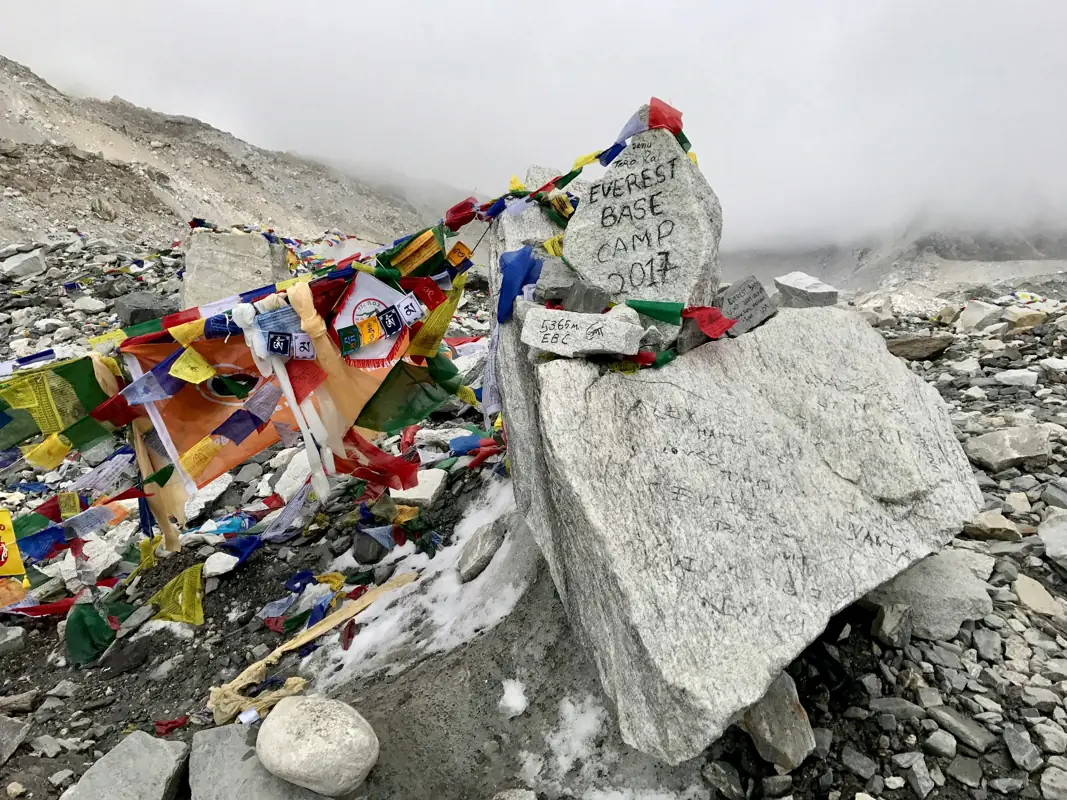
Lobuche to Gorak Shep and Everest Base Camp
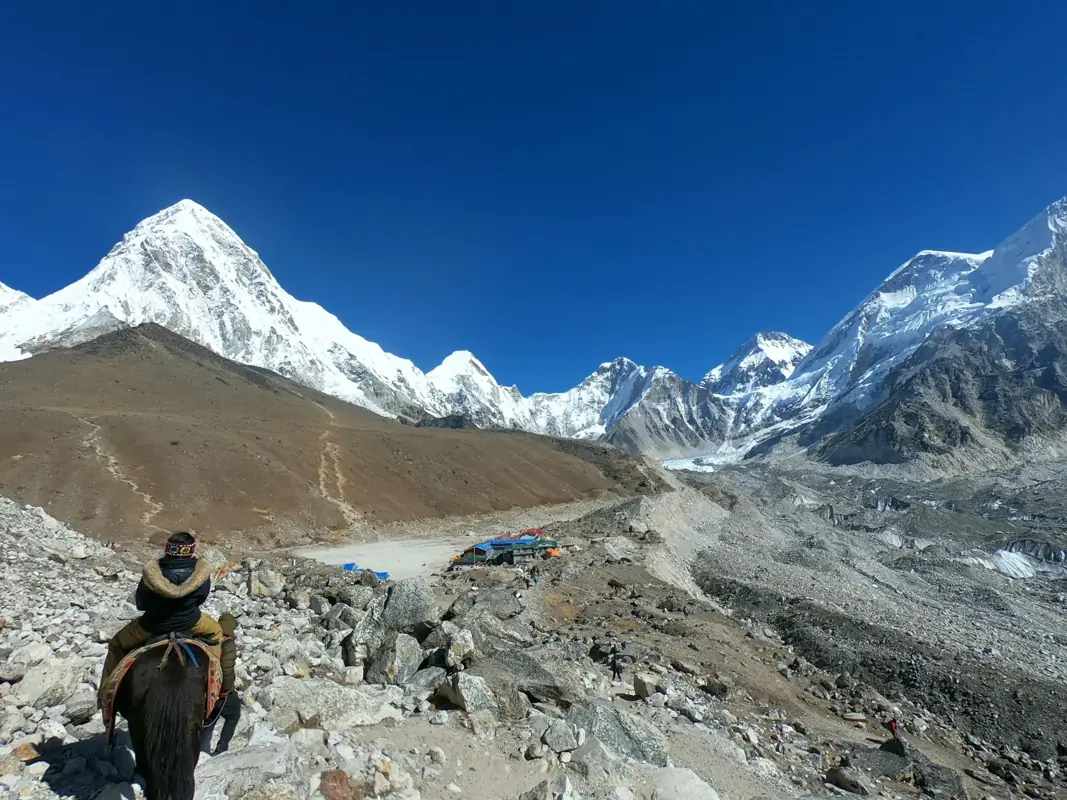
Follow the Khumbu glacier's moraine to Gorak Shep, drop your bags and walk out to Everest Base Camp beside the Khumbu Icefall before returning to Gorak Shep.
- Day 10
Kala Patthar, then down to Dzongla
A pre-dawn climb of Kala Patthar for sunrise on Everest, then back down past Lobuche and along a high traverse to the small settlement of Dzongla below Cho La.
- Day 11
Cho La to Thangnak
The second pass climbs a rocky gully and crosses a small glacier to Cho La at about 5,420 m, then descends steep, loose ground to Thangnak (Dragnag). Conditions on the glacier decide how long this takes.
- Day 12
Thangnak to Gokyo
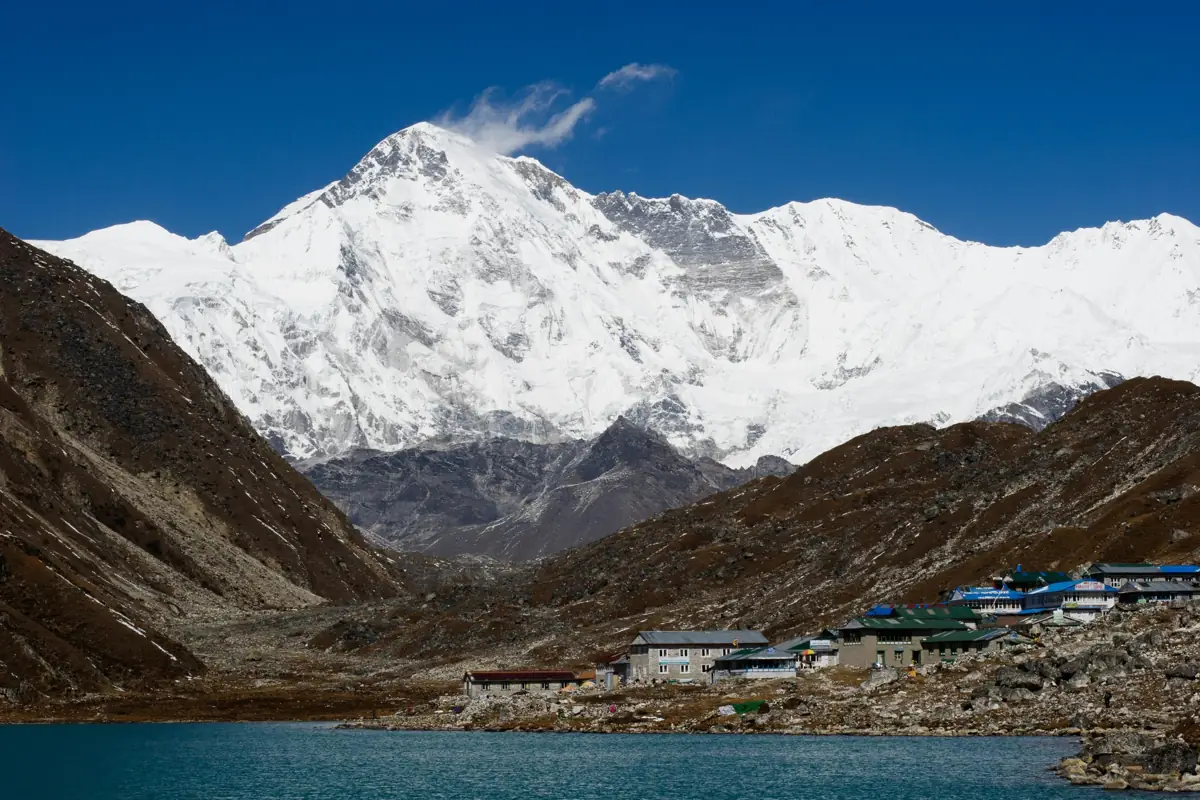
A short crossing of the Ngozumpa glacier's rubble brings you to Gokyo village on the shore of the third lake. A welcome easy day after the pass.
- Day 13
Gokyo Ri sunrise
Climb Gokyo Ri, about 5,357 m, for sunrise over Everest, Lhotse, Makalu and Cho Oyu, then rest in Gokyo or walk up to the fourth lake.
- Day 14
Renjo La to Lungden
The last pass climbs steadily above the lakes to Renjo La at about 5,360 m, with one more view back to Everest, then descends into the Bhote Koshi valley to Lungden.
- Day 15
Lungden to Thame
Down the quiet Bhote Koshi valley, an old trade route towards Tibet, to the village of Thame and its hillside monastery.
- Day 16
Thame to Namche Bazaar
An easy walk through forest and small villages back to Namche, where you rejoin the main trail.
- Day 17
Namche to Lukla
A long final day back down the Dudh Koshi to Lukla, with one last climb at the end.
- Day 18
Fly to Kathmandu
Morning flight back to Kathmandu or Manthali, weather permitting. Keep one or two spare days in case flights are delayed.
This trek climbs above 3,000 m, where the pace of the climb matters. See our guide to altitude sickness on Nepal treks for how to prevent, spot and respond to it.
Best time to trek
The best months for the Everest Three Passes Trek are Mar–May, Oct–Nov.
- Jan
- Feb
- Mar
- Apr
- May
- Jun
- Jul
- Aug
- Sep
- Oct
- Nov
- Dec
How does it compare with other routes? See our month-by-month guide to trekking in Nepal.
Permits & costs
- Permit & park fees
- NPR 8,000 per person (≈ US$52)
- Guide day rates
- $30–$40 per day, set by the guides below
- Sagarmatha National Park entry: NPR 3,000 (about USD 19), bought at the Monjo gate or in Kathmandu. It is charged per entry, and all three passes and the Gokyo valley lie inside the park, so one ticket covers the full loop as long as you don't leave the park and come back in.
- Khumbu Pasang Lhamu municipality fee: NPR 3,000 (about USD 19); SAARC and Chinese nationals pay NPR 2,000. It is collected at Lukla or Monjo at the start of the walk.
- TIMS card: NPR 2,000 (about USD 13). The Nepal Tourism Board lists the Three Passes trek, and the Cho La and Renjo La routes separately, among those needing a licensed guide and an agency-issued TIMS card. The Khumbu municipality has disputed the guide requirement since 2023, so check what applies before you set off.
- Eighteen days is a long time to keep paperwork dry: store the permits and your passport in a waterproof bag, as they can be checked at Lukla and Monjo.
- Fees change; confirm current rates before you travel.
Every fee and rule, trek by trek: our guide to Nepal trekking permits. Which routes need a licensed guide: do you need a guide to trek in Nepal? What a day rate covers, tips and flights: how much a trekking guide costs in Nepal.
Getting there & back
The loop starts and finishes at Lukla. Flights from Kathmandu take about 35 minutes, or leave from Manthali (Ramechhap) in the busy seasons, four to five hours by road from the capital. Coming down from Renjo La you walk out through Thame and rejoin the main trail at Namche, so the last two days retrace the first. Snow on Cho La or Renjo La can cost a day as easily as Lukla weather can, so allow two spare days rather than one.
Everest Three Passes Trek FAQs
How hard is the Everest Three Passes Trek?
It is one of the most demanding teahouse treks in Nepal. Each pass day lasts seven to nine hours above 5,000 m, often starting before dawn, and Cho La crosses a small glacier. You should have previous multi-day trekking experience at altitude and good fitness.
Which direction should I walk the Three Passes?
Most groups go anticlockwise, crossing Kongma La first after acclimatising in Dingboche and Chhukung, because the steepest climbs then come after your body has adjusted. Some walk clockwise starting with Renjo La. Ask your guide which suits the season and current pass conditions.
Do I need a guide for this trek?
The Nepal Tourism Board counts the Three Passes, Cho La and Renjo La routes among those where a licensed guide and an agency-issued TIMS card have been required since 2023, although the Khumbu municipality has not enforced the guide rule in the same way. Whatever the paperwork, this is the Everest route where a guide matters most: the trail over all three passes can be faint or snow-covered, Cho La crosses a small glacier that is often icy, and turning back in bad weather is a judgement call.
Do I need crampons for Cho La?
Often. Cho La crosses a small glacier and can be icy, especially early in the season or after snowfall, and many trekkers carry microspikes or light crampons. Your guide will know current conditions; take their advice before setting off.
How do I avoid altitude sickness on such a long, high route?
Keep the acclimatisation days in Namche and Dingboche, gain height gradually and don't skip rest days to save time. Drink plenty of water and report any headache, nausea or breathlessness to your guide. If symptoms worsen, descend; on this route that can mean leaving a pass for another day.
When is the best time to trek the Three Passes?
October and November are the most reliable months for getting over all three passes. March to May is the other window. In winter, snow can close one or more passes and many of the high lodges shut, while the June to September monsoon makes the passes wet, slippery and often cloud-covered.
What are the teahouses like on the passes?
Lodges exist at every overnight stop, but those at Dzongla, Thangnak and Lungden are small and basic, with simple rooms, shared toilets and a heated dining room. Charging and hot showers cost extra. Bring a warm sleeping bag and some snacks for the long pass days.
Guides who lead the Everest Three Passes Trek
Every one of them is licence-verified by our compliance team. Open a profile to read about them, then send your dates — they reply to you directly with their own price.