Gokyo Ri Trek at a glance
How the grades compare across routes: Nepal trek difficulty grades explained.
Overview
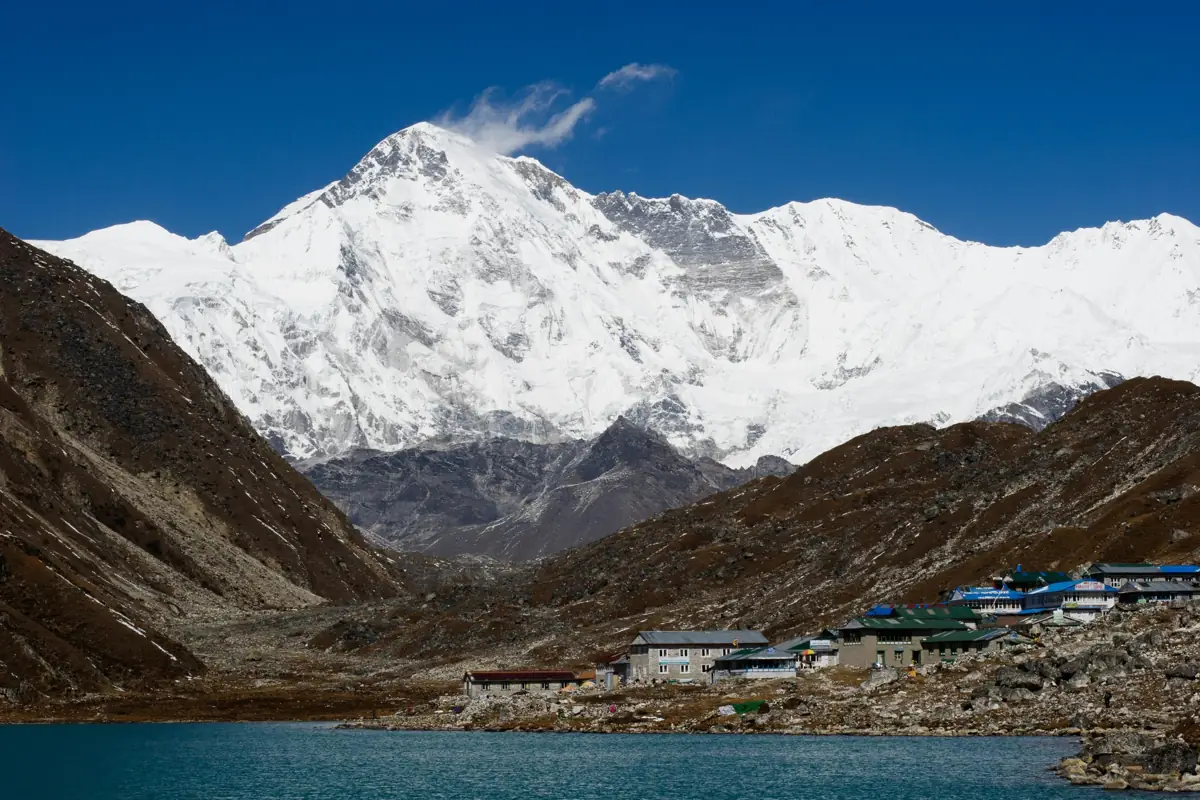
The Gokyo Ri Trek leaves the main Everest Base Camp trail above Namche Bazaar and heads up the quieter Dudh Koshi valley instead, past the villages of Dole and Machhermo to a chain of turquoise glacial lakes at Gokyo. From the lakeside village you climb Gokyo Ri, a 5,357 m viewpoint that looks across the Ngozumpa glacier, the longest in Nepal, to Everest, Lhotse, Makalu and Cho Oyu.
The route sees fewer trekkers than the base camp trail, and the lodges in Dole, Machhermo and Gokyo are smaller and more spread out. The scenery changes from rhododendron and pine forest below Dole to open yak pasture and moraine as you gain height, and the lakes themselves are frozen at the edges for much of the season.
It suits trekkers who want big Himalayan views without the crowds, and who have time to acclimatise properly: Gokyo sits close to 4,800 m, and the itinerary gains height slowly for that reason. Walking days are moderate, usually four to six hours, with one early start for the Gokyo Ri sunrise. Licence-verified guides you contact directly can adjust the pace or add the fifth lake and an extra night in Gokyo.
🌟 Trail Highlights
- Sunrise over Everest and Cho Oyu from the top of Gokyo Ri
- The chain of turquoise Gokyo Lakes
- The Ngozumpa glacier, the longest in Nepal
- A quieter valley away from the main base camp trail
- Namche Bazaar and the Sherpa villages of the lower Khumbu
- Optional walk to the fifth lake below Cho Oyu
Gokyo Ri Trek itinerary
- Day 1
Fly to Lukla, trek to Phakding
A short morning flight lands at Lukla, where you meet your team and walk down the Dudh Koshi valley. It is an easy first day to Phakding, mostly descending.
- Day 2
Phakding to Namche Bazaar
The trail crosses the river on several suspension bridges and enters Sagarmatha National Park at Monjo. A long, steady climb brings you to Namche Bazaar, the main town of the Khumbu.
- Day 3
Acclimatisation day in Namche
A second night in Namche helps your body adjust. Walk up to the ridge above town for views of Everest and Ama Dablam, then return to sleep lower.
- Day 4
Namche to Dole
The path contours above the valley before climbing to the Mong La ridge, then drops to cross the river and climbs through rhododendron forest to the small settlement of Dole.
- Day 5
Dole to Machhermo
A short day on an open hillside with views back towards Kangtega and Thamserku. The short distance is deliberate: stopping in Machhermo keeps the day's height gain modest.
- Day 6
Machhermo to Gokyo
The trail climbs onto the moraine beside the Ngozumpa glacier and passes the first two lakes before reaching Gokyo village on the shore of the third. Afternoon rest and short walks only.
- Day 7
Gokyo Ri sunrise, optional fifth lake
An early climb of about two to three hours reaches the top of Gokyo Ri for sunrise over Everest, Lhotse, Makalu and Cho Oyu. Fit walkers can spend the afternoon walking up the valley to the fourth and fifth lakes.
- Day 8
Gokyo to Dole
Retrace the route down past the lakes and Machhermo to Dole. Descending makes this feel easier than the way up, though it is a long day.
- Day 9
Dole to Namche Bazaar
Descend through the forest to the river and climb back over the Mong La ridge before the final traverse into Namche.
- Day 10
Namche to Lukla
A long final day back down the Dudh Koshi to Lukla, with a last climb at the end. Most groups celebrate with their crew in Lukla that evening.
- Day 11
Fly to Kathmandu
Morning flight back to Kathmandu or Manthali, weather permitting. Keep a spare day in your plans in case flights are delayed.
This trek climbs above 3,000 m, where the pace of the climb matters. See our guide to altitude sickness on Nepal treks for how to prevent, spot and respond to it.
Best time to trek
The best months for the Gokyo Ri Trek are Mar–May, Oct–Nov.
- Jan
- Feb
- Mar
- Apr
- May
- Jun
- Jul
- Aug
- Sep
- Oct
- Nov
- Dec
How does it compare with other routes? See our month-by-month guide to trekking in Nepal.
Permits & costs
- Permit & park fees
- NPR 8,000 per person (≈ US$52)
- Guide day rates
- $25–$40 per day, set by the guides below
- Sagarmatha National Park entry: NPR 3,000 (about USD 19). Most groups pay at the Monjo gate on the walk up to Namche, or buy it in Kathmandu first. The fee is charged per entry, and the Gokyo lakes, a Ramsar-listed wetland since 2007, lie inside the park, so this one ticket covers the whole valley up to Gokyo Ri.
- Khumbu Pasang Lhamu municipality fee: NPR 3,000 (about USD 19), or NPR 2,000 for SAARC and Chinese nationals, collected at Lukla or Monjo as you set off.
- TIMS card: NPR 2,000 (about USD 13). The Nepal Tourism Board names the Gokyo trek among routes needing a licensed guide and an agency-issued TIMS card; the Khumbu municipality has contested the guide part since 2023, so ask your agency what is being checked this season.
- Turning off the main trail above Namche towards Dole adds no further permit. Keep the receipts with your passport for the checks at Lukla and Monjo.
- Fees change; confirm current rates before you travel.
Every fee and rule, trek by trek: our guide to Nepal trekking permits. Which routes need a licensed guide: do you need a guide to trek in Nepal? What a day rate covers, tips and flights: how much a trekking guide costs in Nepal.
Getting there & back
Gokyo is reached from Lukla. The flight from Kathmandu takes about 35 minutes; in spring and autumn many flights use Manthali (Ramechhap) instead, four to five hours by road from the capital. From Lukla you follow the Dudh Koshi to Namche, then leave the Everest Base Camp trail and head up the valley past Dole and Machhermo. The return retraces the same path to Lukla, so put your spare day for flight delays at the end.
Gokyo Ri Trek FAQs
How hard is the Gokyo Ri Trek?
It is graded hard because of the altitude, not the terrain. The trek is non-technical, with mostly four to six hours of walking a day, but you sleep close to 4,800 m at Gokyo and climb to 5,357 m on Gokyo Ri. Regular hill walking or stair training before you go makes a real difference.
How do I avoid altitude sickness on the way to Gokyo?
Follow an itinerary that gains height slowly, like the short days to Dole and Machhermo, and keep the acclimatisation day in Namche. Drink plenty of water, avoid alcohol, and tell your guide about headaches, nausea or unusual breathlessness. If symptoms get worse, the only reliable treatment is to descend.
Do I need a guide for this trek?
The Nepal Tourism Board lists the Gokyo trek among routes where a licensed guide and an agency-issued TIMS card have been required since 2023. The Khumbu municipality has not enforced the guide rule in the same way, so you will still see independent walkers in the valley; check the position before you book. The case for a guide is strongest above Machhermo, where you are sleeping near 4,800 m and setting off for Gokyo Ri before dawn.
Is Gokyo Ri better than Everest Base Camp?
They offer different things. Gokyo Ri gives wider views, including Everest, Cho Oyu and the Ngozumpa glacier, and the valley is quieter; Everest Base Camp is about standing at the foot of the mountain. If you have three weeks, the Three Passes trek links both.
When is the best time to do the Gokyo Ri Trek?
October and November give the clearest views of Cho Oyu and Everest from Gokyo Ri. March to May is the second window, a little warmer, with rhododendrons in flower below Dole. From December to February nights at the lakes are very cold and some lodges shut, and during the June to September monsoon cloud usually hides the peaks.
What are the teahouses like at Gokyo?
Lodges are simple and get more basic with height: twin rooms with thin walls, shared toilets and a heated dining room. Hot showers and charging usually cost extra above Namche. Bring a warm sleeping bag, as rooms are unheated.
Is there Wi-Fi and phone charging on the trek?
Lodges in Namche, Dole, Machhermo and Gokyo sell Wi-Fi or data cards and charge per device, and the prices rise towards the lakes. Mobile signal fades in the upper valley, so don't count on calls from Gokyo. A power bank kept in your sleeping bag overnight stays charged for longer in the cold.
Guides who lead the Gokyo Ri Trek
Every one of them is licence-verified by our compliance team. Open a profile to read about them, then send your dates — they reply to you directly with their own price.