Upper Mustang Trek at a glance
How the grades compare across routes: Nepal trek difficulty grades explained.
Overview
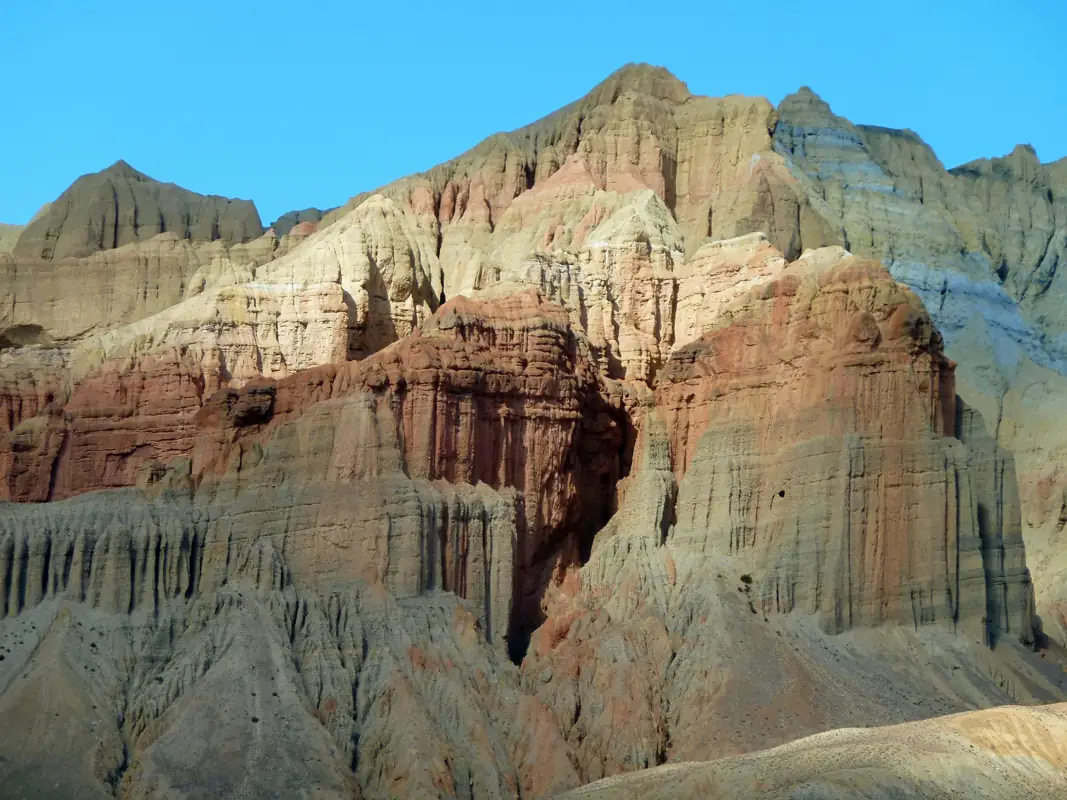
Upper Mustang is the former Kingdom of Lo, a high, dry valley north of the Annapurna and Dhaulagiri ranges that sits in their rain shadow. The trek follows the Kali Gandaki north from Kagbeni to the walled town of Lo Manthang, through a landscape of eroded cliffs, red and ochre ridges, cave dwellings and small irrigated oases of barley and apple orchards.
Culturally, the region is closely tied to Tibet. Villages such as Ghami, Tsarang and Lo Manthang have whitewashed houses with firewood stacked on the roofs, centuries-old monasteries, long mani walls and chortens painted in the region's traditional red, white and grey. Lo Manthang's monasteries and the nearby cave sites are a highlight of the rest day.
Walking days are moderate in length but exposed: the trail crosses several passes around 3,500–4,000 m, and afternoons often bring strong, dusty winds up the valley. Because so little rain reaches the plateau, the trek is one of the few in Nepal that stays walkable through the summer monsoon, while winters are bitterly cold and many residents move south.
Upper Mustang is a restricted area with a costly permit, so it suits trekkers who want a quieter, culture-focused route rather than close-up high peaks. A licence-verified guide you contact directly can help arrange the permit through an agency and plan the pace around the passes.
🌟 Trail Highlights
- The walled town of Lo Manthang and its monasteries
- Rain-shadow canyon landscapes of red, ochre and grey cliffs
- Cave dwellings and sky caves in the cliffs around the valley
- Ghar Gompa (Lo Gekar), one of the oldest monasteries in the region
- Tibetan-influenced villages: Ghami, Tsarang and Dhakmar
- A trek that remains walkable during the summer monsoon
Upper Mustang Trek itinerary
- Day 1
Kathmandu to Pokhara
Fly (about 25 minutes) or drive (6–8 hours) to Pokhara. Use the evening to check gear and confirm the next morning's flight.
- Day 2
Fly to Jomsom, trek to Kagbeni
An early flight up the Kali Gandaki gorge between Dhaulagiri and Annapurna lands in Jomsom. Walk along the riverbed to Kagbeni, the gateway to the restricted area.
- Day 3
Kagbeni to Chele
Permits are checked as you enter Upper Mustang. The trail follows the river past Tangbe and Chhuksang, then climbs steeply to the village of Chele.
- Day 4
Chele to Syangboche
Cross the first passes of the trek above deep, colourful canyons, passing through Samar. Syangboche is a small stop with a few lodges.
- Day 5
Syangboche to Ghami
Climb over a pass with wide views of the plateau, then descend to Ghami, one of the larger villages, known for its long mani wall.
- Day 6
Ghami to Tsarang
Pass the long mani wall and red cliffs of Dhakmar in the distance before reaching Tsarang, with its large monastery and old palace.
- Day 7
Tsarang to Lo Manthang
A gradual climb leads to the edge of the plateau and the first sight of Lo Manthang's walls. Spend the afternoon inside the old town.
- Day 8
Explore Lo Manthang
Visit the town's monasteries and walk or ride to nearby sites such as the Chhoser cave complex or Namgyal Gompa. The rest day also helps acclimatisation.
- Day 9
Lo Manthang to Dhakmar via Ghar Gompa
Return south on the eastern trail via Ghar Gompa (Lo Gekar), one of the region's oldest monasteries. Dhakmar sits beneath striking red cliffs.
- Day 10
Dhakmar to Ghiling
Cross a pass back to Ghami and continue to the quiet village of Ghiling, surrounded by barley fields.
- Day 11
Ghiling to Chhuksang
Retrace the high route over the passes and descend into the Kali Gandaki valley to Chhuksang.
- Day 12
Chhuksang to Jomsom
Follow the riverbed back past Kagbeni to Jomsom; some groups take a jeep for part of this stretch to avoid the afternoon wind.
- Day 13
Fly Jomsom to Pokhara
Take the early morning flight back to Pokhara, then continue to Kathmandu by flight or road if your schedule allows. Keep a buffer day in case of flight delays.
This trek climbs above 3,000 m, where the pace of the climb matters. See our guide to altitude sickness on Nepal treks for how to prevent, spot and respond to it.
Best time to trek
The best months for the Upper Mustang Trek are Apr–Oct.
- Jan
- Feb
- Mar
- Apr
- May
- Jun
- Jul
- Aug
- Sep
- Oct
- Nov
- Dec
How does it compare with other routes? See our month-by-month guide to trekking in Nepal.
Permits & costs
- Permit & park fees
- US$500 + NPR 5,000 per person (≈ US$532 in total)
- Area
- Restricted: a special permit is required
- Guide day rates
- $25–$40 per day, set by the guides below
- Upper Mustang restricted-area permit: USD 50 per person for every day you spend north of Kagbeni, where the restricted zone begins. A typical 10-day loop to Lo Manthang therefore comes to about USD 500; a November 2025 Cabinet decision replaced the old flat USD 500 for the first 10 days, so check with your agency that the per-day rate is the one being charged.
- Annapurna Conservation Area Permit (ACAP): NPR 3,000 (about USD 19). Upper Mustang sits inside the conservation area, so you need it as well as the restricted permit.
- TIMS card: NPR 2,000 (about USD 13). The Nepal Tourism Board lists Upper Mustang among the routes where the agency issues it with your licensed guide.
- Your agency applies for the restricted permit at the Department of Immigration in Kathmandu; you can't buy it yourself or trek the zone without a licensed guide. Solo trekkers have been able to apply since 22 March 2026.
- Rates are revised from time to time, so get a written quote for the permits from your agency before you book flights to Jomsom.
Every fee and rule, trek by trek: our guide to Nepal trekking permits. Which routes need a licensed guide: do you need a guide to trek in Nepal? What a day rate covers, tips and flights: how much a trekking guide costs in Nepal.
Getting there & back
Most trekkers fly Kathmandu–Pokhara, then take the short morning flight from Pokhara to Jomsom; flights only run early in the day and are often delayed or cancelled by wind or cloud. The alternative is a jeep or bus from Pokhara to Jomsom along the Kali Gandaki road, a long day of 8–10 hours on rough sections. Return the same way, and keep at least one spare day for weather.
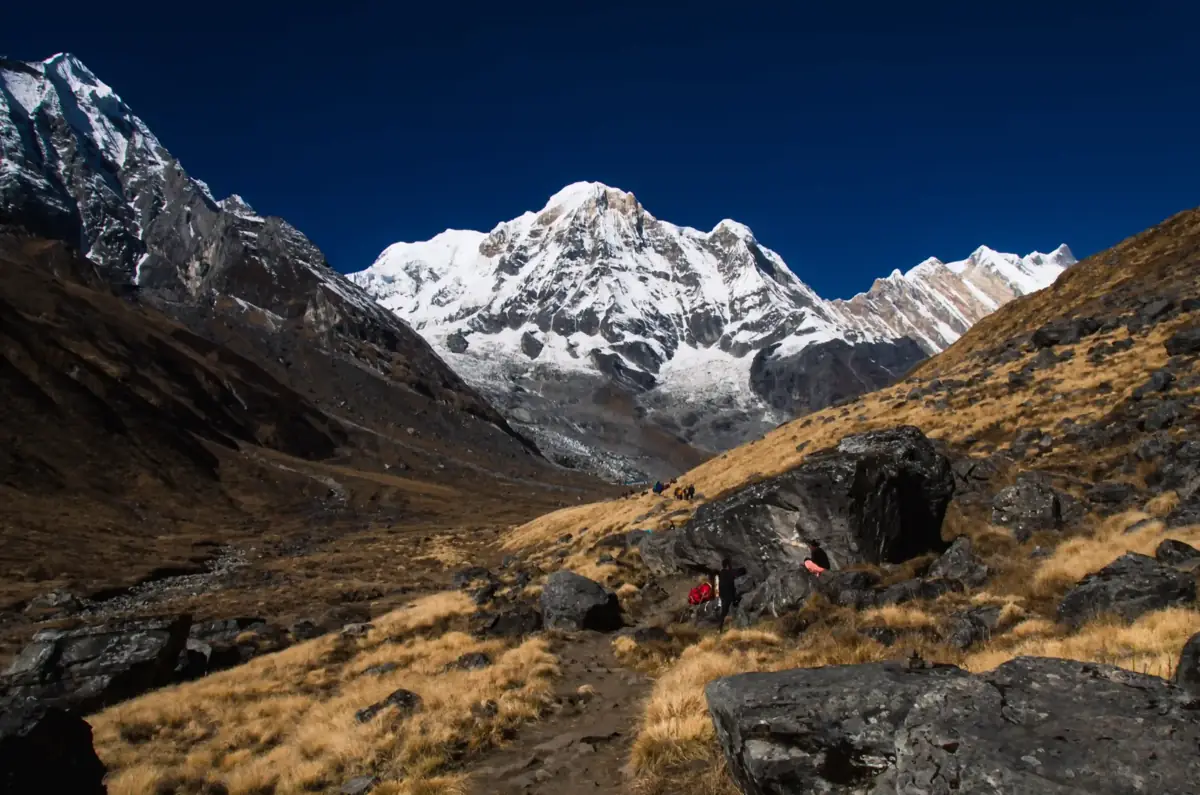
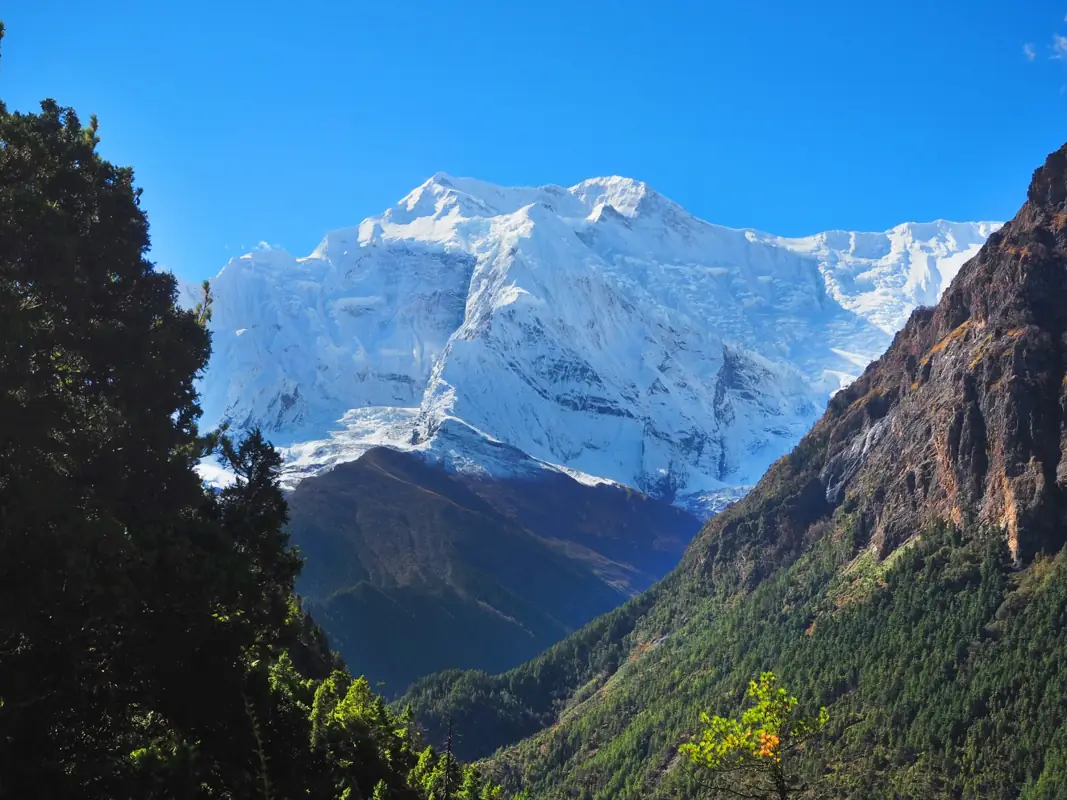
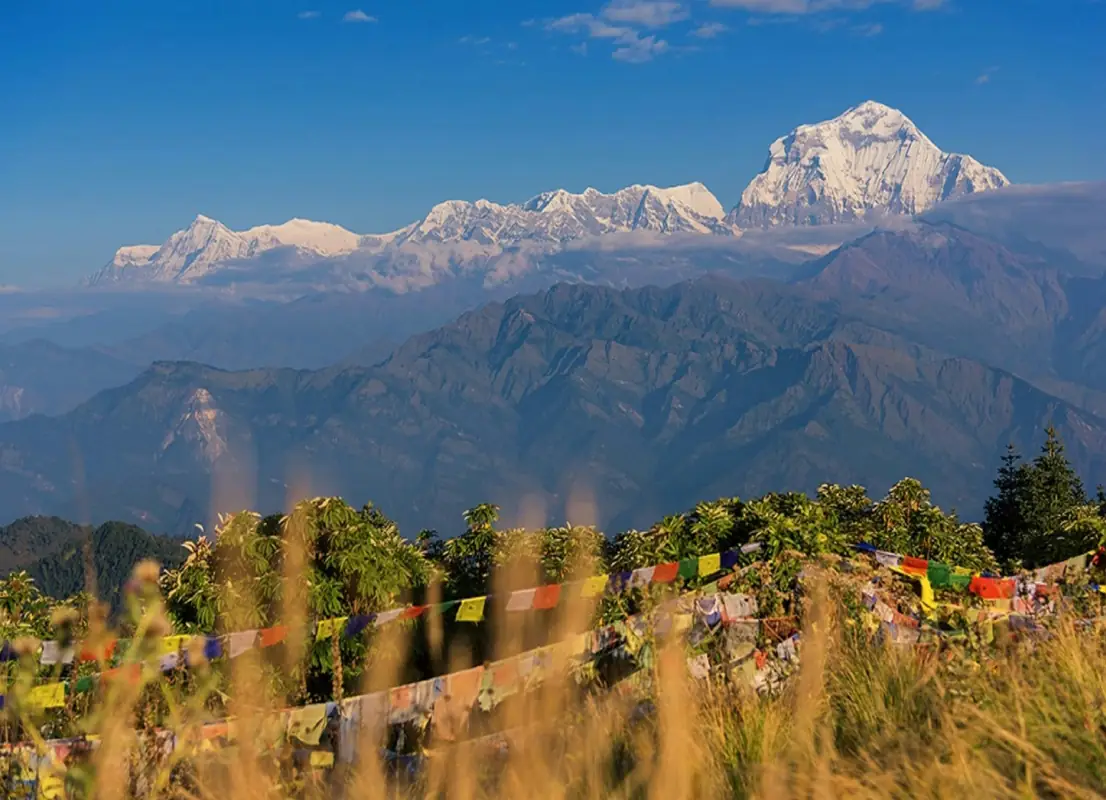
📸 Trail Checkpoints & Scenery Gallery

Upper Mustang Trek FAQs
How difficult is the Upper Mustang Trek?
It is moderately strenuous. Daily walks are 4–7 hours, the trail repeatedly climbs to passes around 3,500–4,000 m, and wind and dust can make afternoons tiring. There is no technical terrain, so good general fitness and some multi-day hiking experience are enough.
Do I need a guide for Upper Mustang?
Yes. Upper Mustang is a restricted area: the special permit is only issued through a registered trekking agency, and you must walk with a licensed guide. Since 22 March 2026 a single trekker can get the permit (previously a group of at least two was required), but independent trekking without a guide is still not allowed.
Why is the Upper Mustang permit so expensive?
The restricted area permit costs about USD 50 per person for each day you spend inside the restricted zone, on top of the Annapurna Conservation Area Permit. The Nepal Tourism Board now lists it at USD 50 per person per day, replacing the earlier USD 500 lump sum for the first 10 days, so a typical 10-day stay still costs about USD 500 but a shorter one costs less. Confirm current rates before booking, as they change.
Can I trek Upper Mustang during the monsoon?
Yes. The valley lies in the rain shadow of the Annapurna and Dhaulagiri ranges, so it receives far less rain than the rest of Nepal and June–September are trekkable. The main monsoon risk is getting there: Jomsom flights and the Kali Gandaki road are more often disrupted.
Will I get altitude sickness?
Most overnight stops are between 3,000 and 3,800 m, high enough to cause symptoms. The gradual ascent and a rest day in Lo Manthang help; drink plenty of water and tell your guide early if you get a persistent headache, nausea or dizziness. Descending is the only reliable treatment if symptoms worsen.
What is the accommodation like?
Teahouses along the route are simple family-run lodges with basic rooms and a shared dining area, and Lo Manthang has several more comfortable options. Food is mostly dal bhat, noodles, soups and Tibetan bread. Many lodges close in winter.
Is there mobile signal and electricity?
Mobile coverage exists in Lo Manthang and some larger villages but is unreliable between them. Most lodges have solar power for charging, sometimes for a small fee. Bring a power bank, especially for cold mornings when batteries drain quickly.
Guides who lead the Upper Mustang Trek
Every one of them is licence-verified by our compliance team. Open a profile to read about them, then send your dates — they reply to you directly with their own price.