Annapurna Base Camp Trek at a glance
How the grades compare across routes: Nepal trek difficulty grades explained.
Overview
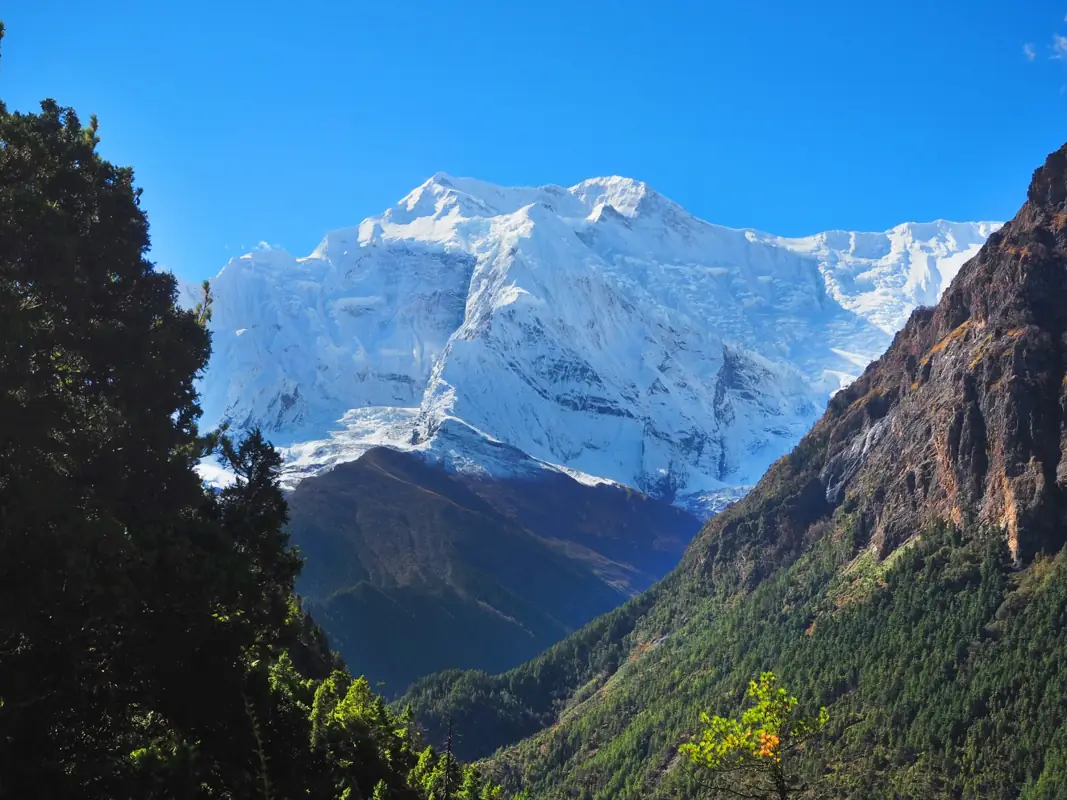
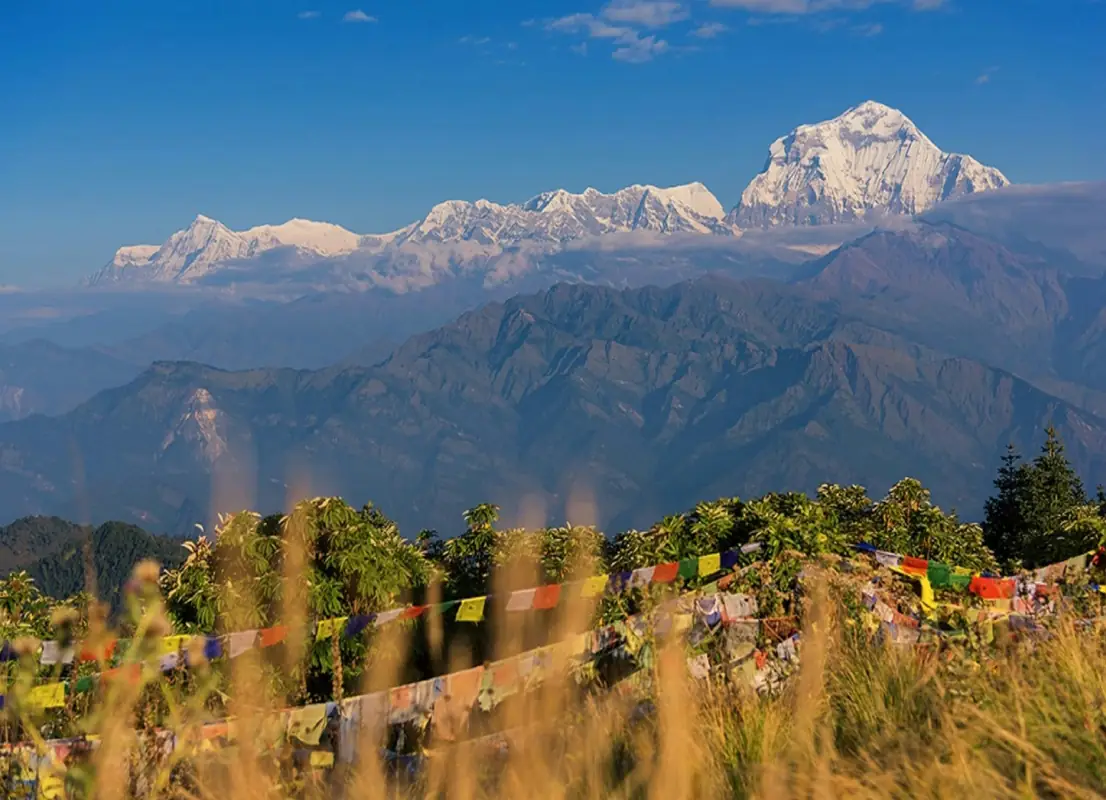
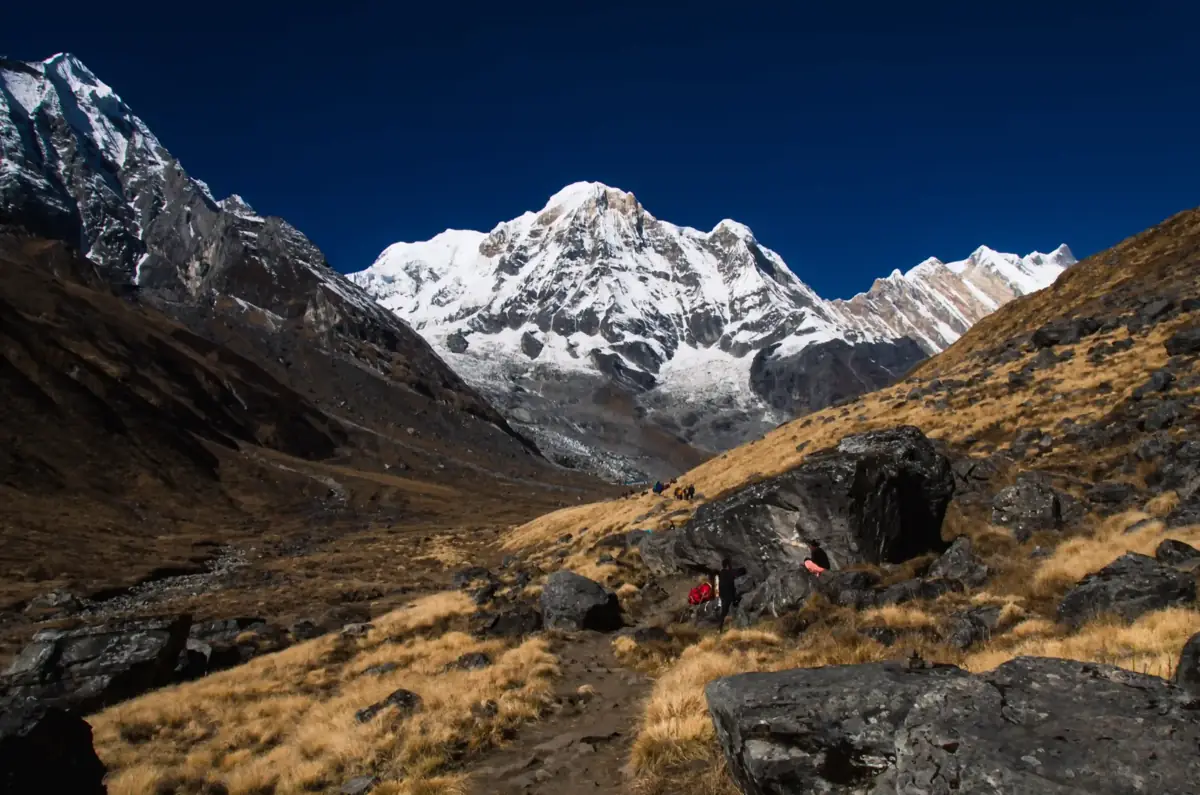
The Annapurna Base Camp Trek climbs from the foothills north of Pokhara into the Annapurna Sanctuary, a high glacial basin ringed by Annapurna I, Annapurna South, Hiunchuli and the fishtail summit of Machapuchare. The camp at about 4,130 m sits inside that amphitheatre, and sunrise on the surrounding peaks is the reason most people come.
The lower trail passes Gurung villages such as Ghandruk and Chhomrong, terraced fields and stone staircases, then follows the Modi Khola gorge through bamboo and rhododendron forest. Above Deurali the valley narrows and the vegetation thins before opening into the Sanctuary at Machapuchare Base Camp.
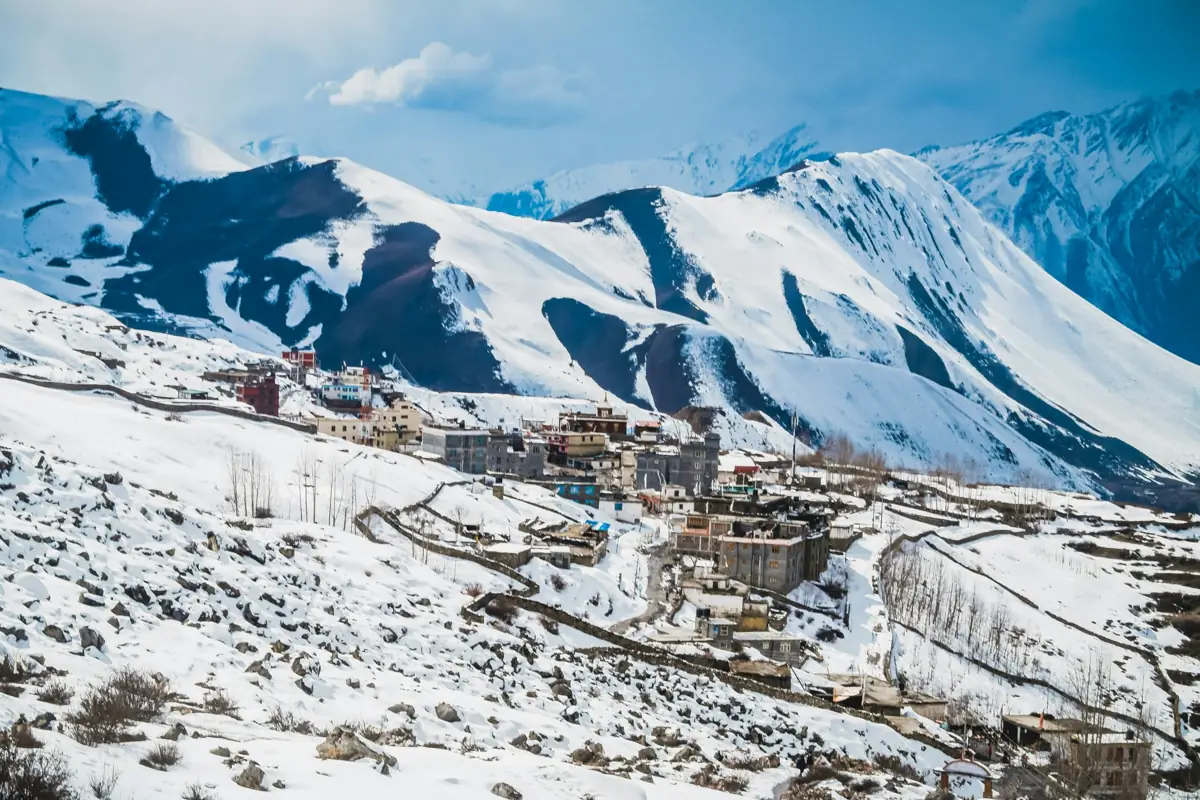
The route reaches a lower altitude than the Everest region and is shorter overall, which makes it a good first Himalayan trek for fit walkers. It is still hard work: the stone steps around Chhomrong are relentless, and the gorge above Bamboo can carry avalanche risk after heavy snow, so conditions need checking in winter and early spring.
Nights are spent in teahouses along the whole route, and the return passes the natural hot springs at Jhinu Danda, a welcome stop for tired legs. A licence-verified guide you contact directly will know current trail conditions in the gorge and can plan the pace around how you are acclimatising.
🌟 Trail Highlights
- Sunrise on Annapurna I and Machapuchare from Annapurna Base Camp
- Walking into the enclosed Annapurna Sanctuary
- Gurung villages of Ghandruk and Chhomrong
- Rhododendron and bamboo forest in the Modi Khola gorge
- Natural hot springs at Jhinu Danda
- Machapuchare Base Camp below the 'fishtail' peak
Annapurna Base Camp Trek itinerary
- Day 1
Drive from Pokhara, trek to Ghandruk
A jeep ride of about two and a half hours brings you to Kimche, from where a short climb reaches Ghandruk. This large Gurung village has stone houses, a small museum and views of Annapurna South and Machapuchare.
- Day 2
Ghandruk to Chhomrong
The trail climbs over a ridge at Komrong Danda and drops to the Kimrong Khola before a steady climb to Chhomrong. Chhomrong is the last large village and the gateway to the Sanctuary.
- Day 3
Chhomrong to Bamboo
Long stone staircases lead down to the Chhomrong Khola and back up to Sinuwa before the trail enters dense forest. Bamboo is a small cluster of lodges in the gorge.
- Day 4
Bamboo to Deurali
The path climbs steadily through forest past Dovan and Himalaya, with waterfalls on the far side of the valley. Above Himalaya the trees thin out and the gorge narrows toward Deurali.
- Day 5
Deurali to Annapurna Base Camp via Machapuchare Base Camp
The trail follows the river into the Sanctuary, reaching Machapuchare Base Camp before the final gentle climb to Annapurna Base Camp. Arrive in time to watch the late light on the peaks around you.
- Day 6
Sunrise at base camp, descend to Bamboo
Wake early for sunrise on Annapurna I, Hiunchuli and Machapuchare. After breakfast, retrace the route down the gorge to Bamboo.
- Day 7
Bamboo to Jhinu Danda
Climb back up to Chhomrong, then descend steeply to Jhinu Danda. A 20-minute walk below the village brings you to the riverside hot springs.
- Day 8
Jhinu Danda to Siwai, drive to Pokhara
A short walk along the Modi Khola reaches the road at Siwai or New Bridge. A jeep takes you back to Pokhara in the afternoon.
This trek climbs above 3,000 m, where the pace of the climb matters. See our guide to altitude sickness on Nepal treks for how to prevent, spot and respond to it.
Best time to trek
The best months for the Annapurna Base Camp Trek are Mar–May, Oct–Nov.
- Jan
- Feb
- Mar
- Apr
- May
- Jun
- Jul
- Aug
- Sep
- Oct
- Nov
- Dec
How does it compare with other routes? See our month-by-month guide to trekking in Nepal.
Permits & costs
- Permit & park fees
- NPR 5,000 per person (≈ US$32)
- Guide day rates
- $25–$40 per day, set by the guides below
- Annapurna Conservation Area Permit (ACAP): NPR 3,000 (about USD 19), issued at the Nepal Tourism Board offices in Kathmandu and Pokhara.
- TIMS card: NPR 2,000 (about USD 13), issued through a registered trekking agency together with your licensed guide.
- Permits are checked at Ghandruk, Chhomrong and other checkpoints, so keep them with your passport.
- Both permits are shown again on the way down from the sanctuary, so keep them with you until the trek ends; your agency can confirm the current rates when it books your guide.
Every fee and rule, trek by trek: our guide to Nepal trekking permits. Which routes need a licensed guide: do you need a guide to trek in Nepal? What a day rate covers, tips and flights: how much a trekking guide costs in Nepal.
Getting there & back
Reach Pokhara from Kathmandu by a 25-minute flight or a 6–8 hour bus or car journey. From Pokhara, jeeps run to the trailheads at Kimche or Siwai in about 2–3 hours, and the same roads bring you back at the end. Road sections can be rough or blocked by landslides during the monsoon.
📸 Trail Checkpoints & Scenery Gallery

Annapurna Base Camp Trek FAQs
How difficult is the Annapurna Base Camp Trek?
It is a moderate trek with no technical sections, but it involves thousands of stone steps, especially around Chhomrong and Sinuwa. Expect 5–6 hours of walking on most days. Regular walkers with some hill training generally manage it well.
Is altitude sickness a risk at Annapurna Base Camp?
The base camp is at about 4,130 m, high enough for altitude sickness to affect some people. The itinerary gains height gradually, and the night at Deurali helps you adjust before the Sanctuary. If symptoms such as a severe headache, vomiting or breathlessness at rest appear, descend rather than push on.
Do I need a guide for this trek?
Since April 2023 Nepal has required foreign trekkers in the Annapurna Conservation Area to trek with a licensed guide, and the TIMS card is issued with one. Check current rules before you travel. A guide also knows the avalanche-prone sections of the gorge and when they are safe to cross.
When is the best time to go?
October and November offer clear skies and stable weather, and March to May brings rhododendron blossom along the lower trail. Winter is cold in the Sanctuary and snow can raise avalanche risk above Deurali. The June–September monsoon means rain, leeches and cloud-covered views.
What is accommodation like on the route?
Teahouses run the whole way to base camp, with twin rooms, shared bathrooms and a communal dining room. Lodges in the Sanctuary are few and fill up quickly in peak season, so your guide may plan the stops around availability.
Is there avalanche danger on the trail?
The section between Himalaya, Deurali and Machapuchare Base Camp runs below steep slopes that can release avalanches after heavy snowfall, mainly in winter and early spring. Local lodges and guides track conditions and may advise waiting or turning back. Follow that advice.
Can I charge devices and get Wi-Fi?
Most lodges offer charging and Wi-Fi for a small fee, and prices rise with altitude. Mobile signal is patchy in the upper gorge. A power bank is worth carrying.
Guides who lead the Annapurna Base Camp Trek
Every one of them is licence-verified by our compliance team. Open a profile to read about them, then send your dates — they reply to you directly with their own price.