Jomsom Muktinath Trek at a glance
How the grades compare across routes: Nepal trek difficulty grades explained.
Overview
The Jomsom Muktinath Trek is a short walk into the dry upper Kali Gandaki valley, on the edge of Mustang. After a mountain flight from Pokhara to Jomsom, it follows the wide river bed to the old village of Kagbeni, then climbs to Muktinath, a temple complex at about 3,710–3,800 m sacred to both Hindus and Buddhists, known for its 108 water spouts and a natural gas flame that burns beside a spring.
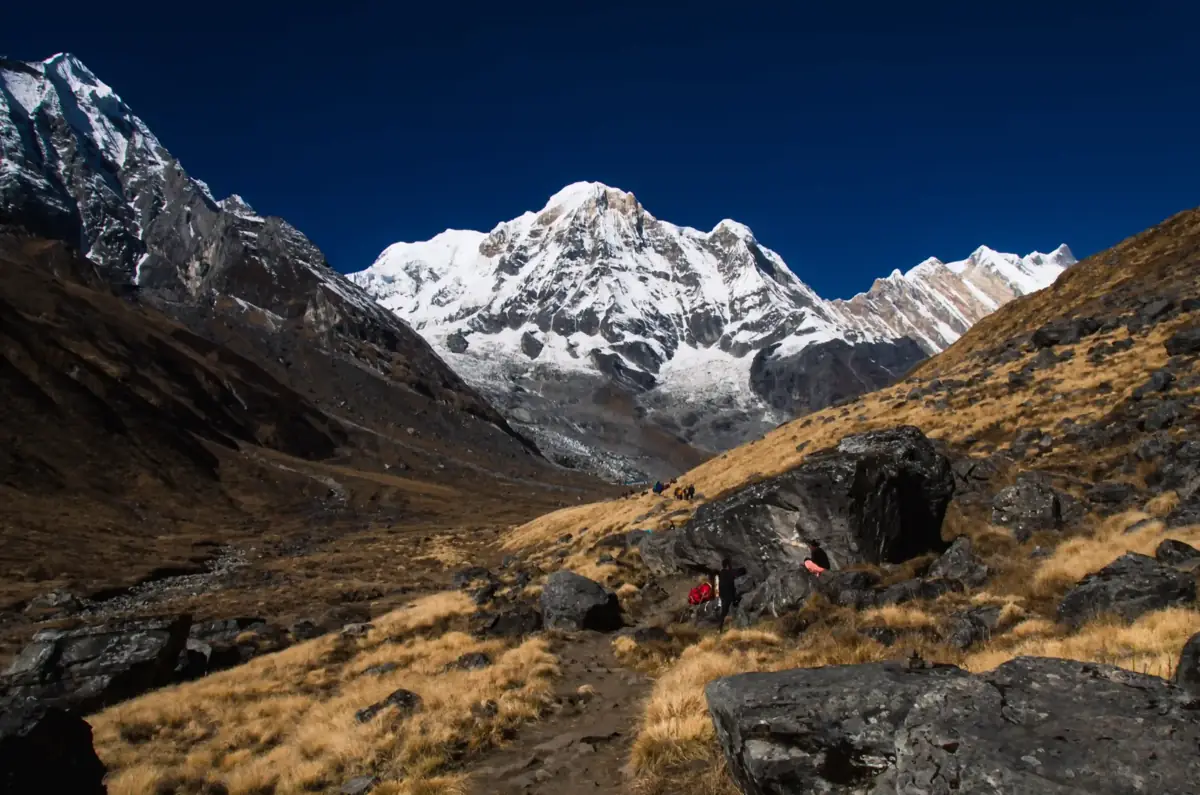
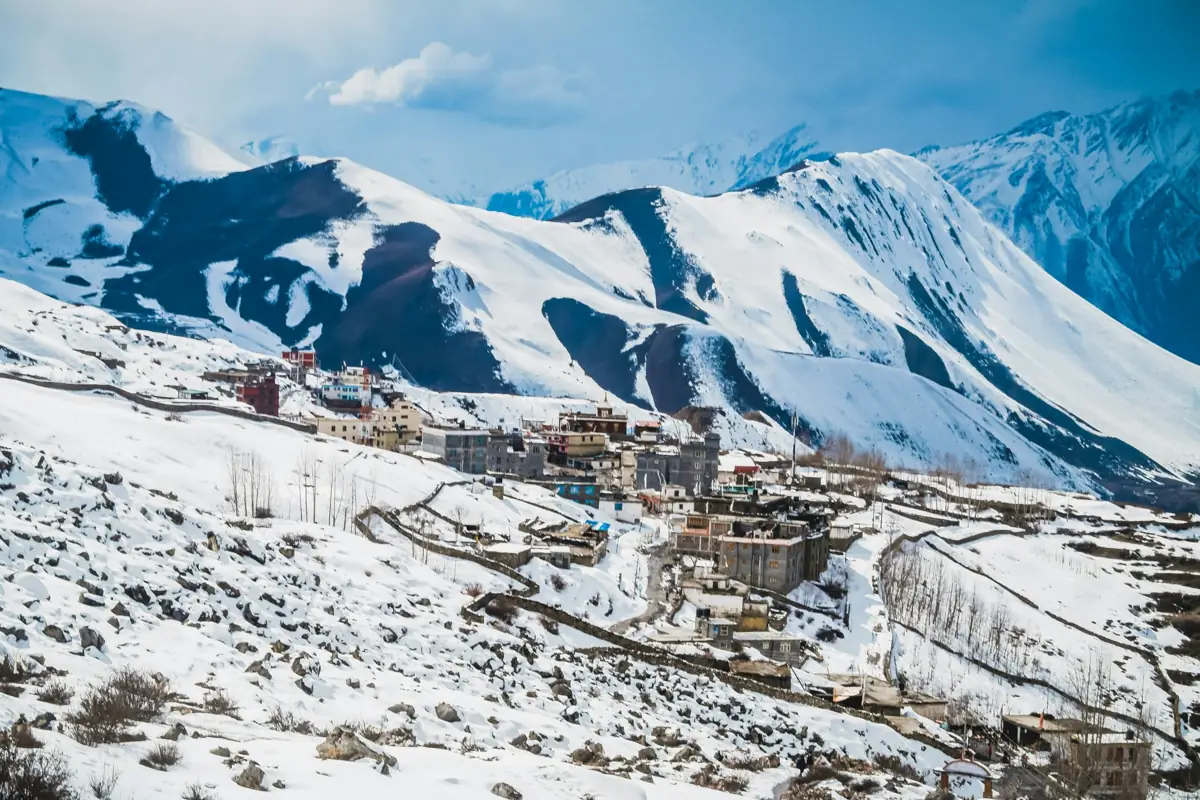
The landscape is closer to Tibet than to the green hills of Pokhara: wind-carved cliffs, flat-roofed stone villages, apple orchards and chortens, with Dhaulagiri and Nilgiri above the valley. Thakali and Tibetan-influenced culture is everywhere, especially in Kagbeni and Marpha.
A road now runs the length of the valley, so jeeps and motorbikes share parts of the route. Good itineraries use side trails where they exist and keep road walking short. The trek suits people with limited time, pilgrims, and walkers who want altitude and scenery without long climbs; days are moderate, though afternoon wind in the valley is strong. The Pokhara–Jomsom flight depends on morning weather, so build in a spare day. Licence-verified guides you contact directly can explain which trails they use to avoid the road.
🌟 Trail Highlights
- The mountain flight between Pokhara and Jomsom past Dhaulagiri and Annapurna
- Kagbeni, a walled village at the gateway to Upper Mustang
- The Muktinath temple, its 108 water spouts and the eternal flame
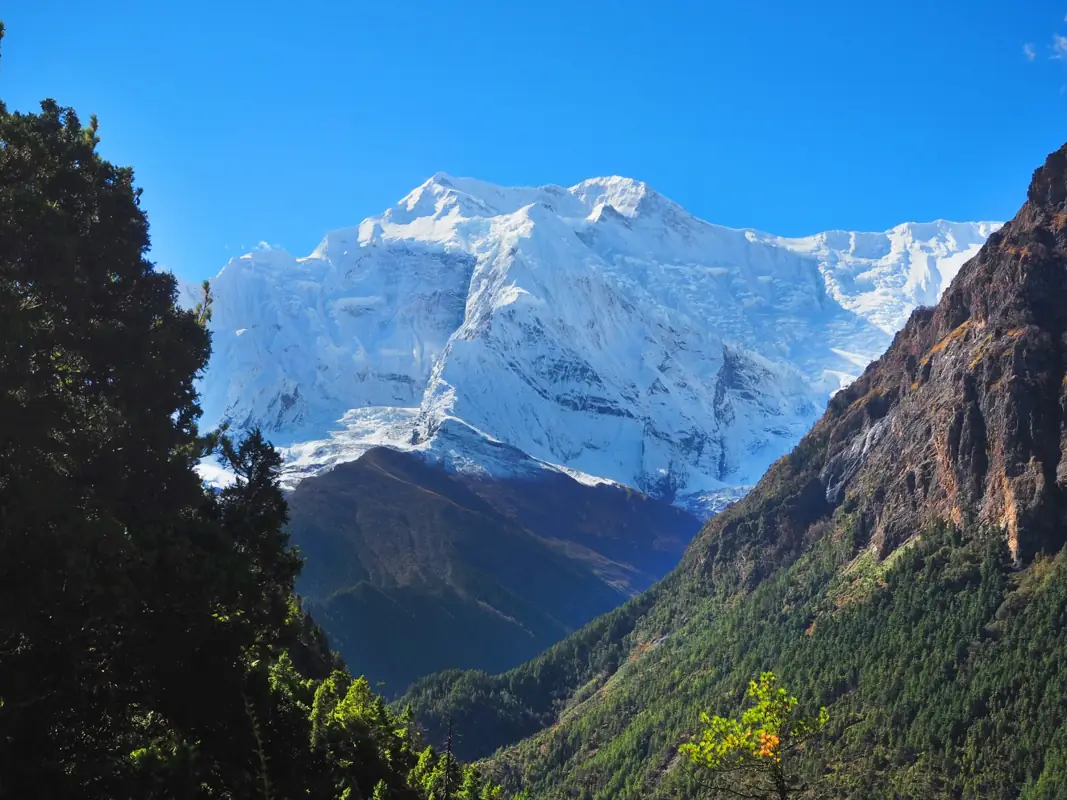
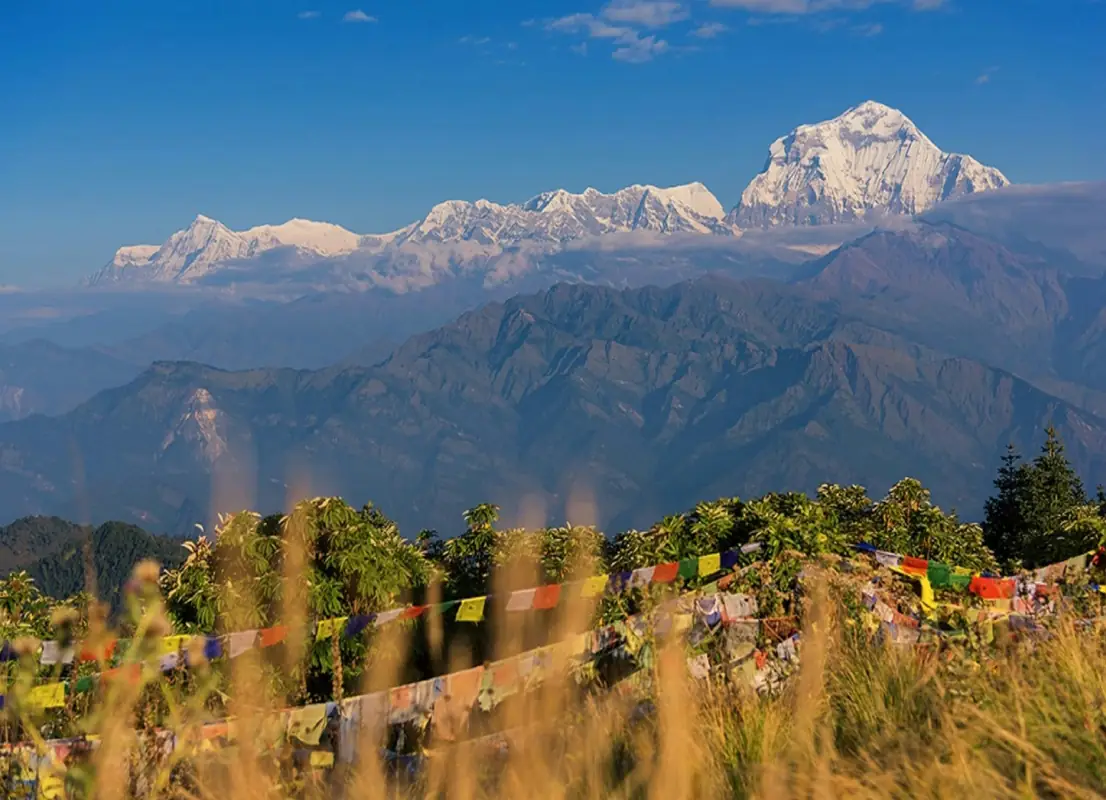
- Views of Dhaulagiri, Nilgiri and Tukuche Peak above the Kali Gandaki
- Marpha's whitewashed lanes, apple orchards and monastery
- Thakali food and culture in the upper Kali Gandaki
Jomsom Muktinath Trek itinerary
- Day 1
Kathmandu to Pokhara
Drive or fly to Pokhara. Use the afternoon to check gear and confirm the next morning's flight.
- Day 2
Fly to Jomsom, walk to Kagbeni
An early flight up the Kali Gandaki gorge to Jomsom. Walk north along the river bed, partly on side trails away from the road, to Kagbeni with its red monastery and mud-brick lanes.
- Day 3
Kagbeni to Muktinath
Climb out of the Kali Gandaki through Khingar and Jharkot to Ranipauwa, the village below the temple. The views open up towards Dhaulagiri as you gain height.
- Day 4
Muktinath temple and Jharkot
Visit the Muktinath temple complex in the morning, including the 108 water spouts and the Jwala Mai shrine with its natural flame. In the afternoon walk down to Jharkot to see its monastery and fortress ruins, then return to Ranipauwa.
- Day 5
Muktinath to Jomsom
Descend to the Kali Gandaki, either on the main trail through Ekle Bhatti or on the quieter path via Lubra village, then walk down the valley to Jomsom. Afternoon wind in the valley can be strong, so start early.
- Day 6
Jomsom to Marpha and back
A day walk south to Marpha, a Thakali village known for apple orchards and whitewashed houses, and its monastery. Return to Jomsom, or stay overnight in Marpha if your flight timing allows.
- Day 7
Fly Jomsom to Pokhara
A morning flight back to Pokhara. Flights are often delayed or cancelled by wind or cloud, which is why this day is kept short.
- Day 8
Pokhara to Kathmandu
Drive or fly back to Kathmandu. Keep this day flexible in case the Jomsom flight was delayed.
This trek climbs above 3,000 m, where the pace of the climb matters. See our guide to altitude sickness on Nepal treks for how to prevent, spot and respond to it.
Best time to trek
The best months for the Jomsom Muktinath Trek are Mar–May, Sep–Nov.
- Jan
- Feb
- Mar
- Apr
- May
- Jun
- Jul
- Aug
- Sep
- Oct
- Nov
- Dec
How does it compare with other routes? See our month-by-month guide to trekking in Nepal.
Permits & costs
- Permit & park fees
- NPR 5,000 per person (≈ US$32)
- Guide day rates
- $25–$40 per day, set by the guides below
- ACAP, NPR 3,000 (about USD 19): Jomsom, Kagbeni, Marpha and Muktinath are all in the Annapurna Conservation Area, and the permit is checked at Jomsom airport and along the valley.
- TIMS card, NPR 2,000 (about USD 13): ask your agency whether one is being issued for this route; it is arranged with your licensed guide.
- No restricted-area permit is needed for Jomsom, Kagbeni or Muktinath. Kagbeni is the boundary: north of it is Upper Mustang, a separate restricted area with its own daily permit.
- Guide: foreign trekkers in the conservation area have needed a licensed guide since 1 April 2023, booked through a registered agency.
- Check fees with your agency before paying, as they are revised.
Every fee and rule, trek by trek: our guide to Nepal trekking permits. Which routes need a licensed guide: do you need a guide to trek in Nepal? What a day rate covers, tips and flights: how much a trekking guide costs in Nepal.
Getting there & back
Most trekkers fly: a 20–25 minute morning flight from Pokhara lands in Jomsom, but wind and cloud often delay or cancel it, so keep a spare day at each end. By road, jeeps and buses take a full day or more up the Kali Gandaki via Beni and Tatopani. Pokhara itself is 6–7 hours from Kathmandu by tourist bus or a short flight.
📸 Trail Checkpoints & Scenery Gallery

Jomsom Muktinath Trek FAQs
How difficult is the Jomsom Muktinath Trek?
It is easy to moderate. Walking days are three to six hours on mostly good trails, with one steady climb from Kagbeni to Muktinath. The main challenges are the altitude near 3,700–3,800 m and strong afternoon wind in the Kali Gandaki valley.
Will I get altitude sickness?
Some people feel mild symptoms at Muktinath because the flight to Jomsom gains height quickly. The itinerary spends a night at Kagbeni and two nights at Ranipauwa to help. Drink plenty of water, walk slowly, and tell your guide about headaches or nausea.
Is the trek on a road?
Partly. A road now runs up the Kali Gandaki to Muktinath, and jeeps and motorbikes use it. Good guides choose side trails along the river and through villages where they exist, but some sections share the road, which can be dusty in dry, windy weather.
Do I need a guide?
Yes. The whole route is inside the Annapurna Conservation Area, where foreign trekkers have needed a licensed guide arranged through a registered agency since 1 April 2023. On this trek a guide is especially useful for rebooking when the Jomsom flight is cancelled and for finding the village paths that avoid the jeep road.
What happens if the Jomsom flight is cancelled?
Flights between Pokhara and Jomsom run in the morning and are often delayed or cancelled by wind or cloud. Keep a spare day at the end of the trip. If flights are grounded for longer, the fallback is a jeep or bus down the Kali Gandaki road, which takes most of a day.
When is the best time to go?
March to May and September to November are the most popular. Because the upper Kali Gandaki lies in a rain shadow, the trek is also possible in the monsoon, though the flight and the road below Jomsom are less reliable then. Winter is cold and windy, but the route is usually open.
What is special about Muktinath?
Muktinath is one of the most important pilgrimage sites in Nepal for both Hindus and Buddhists. The temple has 108 water spouts that pilgrims bathe under and a shrine where a natural gas flame burns beside a spring. Dress modestly and ask before photographing people at prayer.
Guides who lead the Jomsom Muktinath Trek
Every one of them is licence-verified by our compliance team. Open a profile to read about them, then send your dates — they reply to you directly with their own price.