Langtang Valley with Tserko Ri Trek at a glance
How the grades compare across routes: Nepal trek difficulty grades explained.
Overview
This version of the Langtang trek is planned around the high ground above Kyanjin Gompa rather than the walk to it. After the usual approach up the Langtang Khola from Syabrubesi, it gives you three full days based at Kyanjin: a first climb of Kyanjin Ri (about 4,773 m) to acclimatise, a long day to the summit of Tserko Ri (about 4,984 m), and a walk up the valley towards Langshisa Kharka and the Langtang glacier.
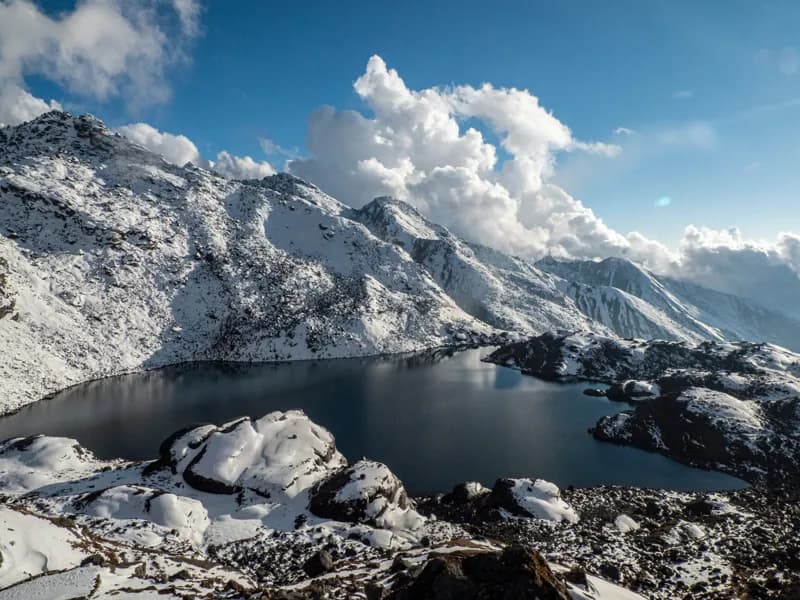
Tserko Ri is a non-technical trekking peak, but it is a big day: a steep climb of more than 1,100 m from Kyanjin and back, much of it on loose ground above the last yak pastures. From the top you look across the Langtang Lirung massif, the glaciers spilling off Langtang II and Gangchenpo, and north towards the Tibetan border ranges. The extra nights at Kyanjin are what make the summit realistic; they give your body time to adjust before you go above 4,500 m.
The trek suits people who have walked at altitude before and want a summit without ropes or climbing gear. You need good fitness and a willingness to start early, often before dawn, when the views are clearest and before afternoon cloud builds.
Licence-verified guides you contact directly can judge the weather and your acclimatisation on the day, and turn the summit attempt around if conditions or your health call for it.
🌟 Trail Highlights
- Summit of Tserko Ri at about 4,984 m, the high point of the Langtang Valley
- Acclimatisation climb of Kyanjin Ri the day before
- Three nights at Kyanjin Gompa with its cheese factory and monastery
- Valley walk towards Langshisa Kharka and the Langtang glacier
- Close views of Langtang Lirung and the glaciers of Langtang II
- Rebuilt Langtang village and the Tamang settlements of the lower valley
Langtang Valley with Tserko Ri Trek itinerary
- Day 1
Kathmandu to Syabrubesi
A long road journey north via Trishuli Bazaar and Dhunche, where your Langtang National Park permit is checked. Syabrubesi sits on the Bhote Koshi near where the Langtang Khola joins it.
- Day 2
Syabrubesi to Lama Hotel
Cross the river and climb steadily through subtropical forest along the Langtang Khola, with langur monkeys sometimes in the trees. Lama Hotel is a cluster of lodges in a narrow, wooded part of the valley.
- Day 3
Lama Hotel to Langtang village
The forest gives way to open yak pasture around Ghora Tabela, where the valley widens and Langtang Lirung comes into view. Langtang village was rebuilt after the 2015 earthquake, beside the landslide that buried the old settlement.
- Day 4
Langtang village to Kyanjin Gompa
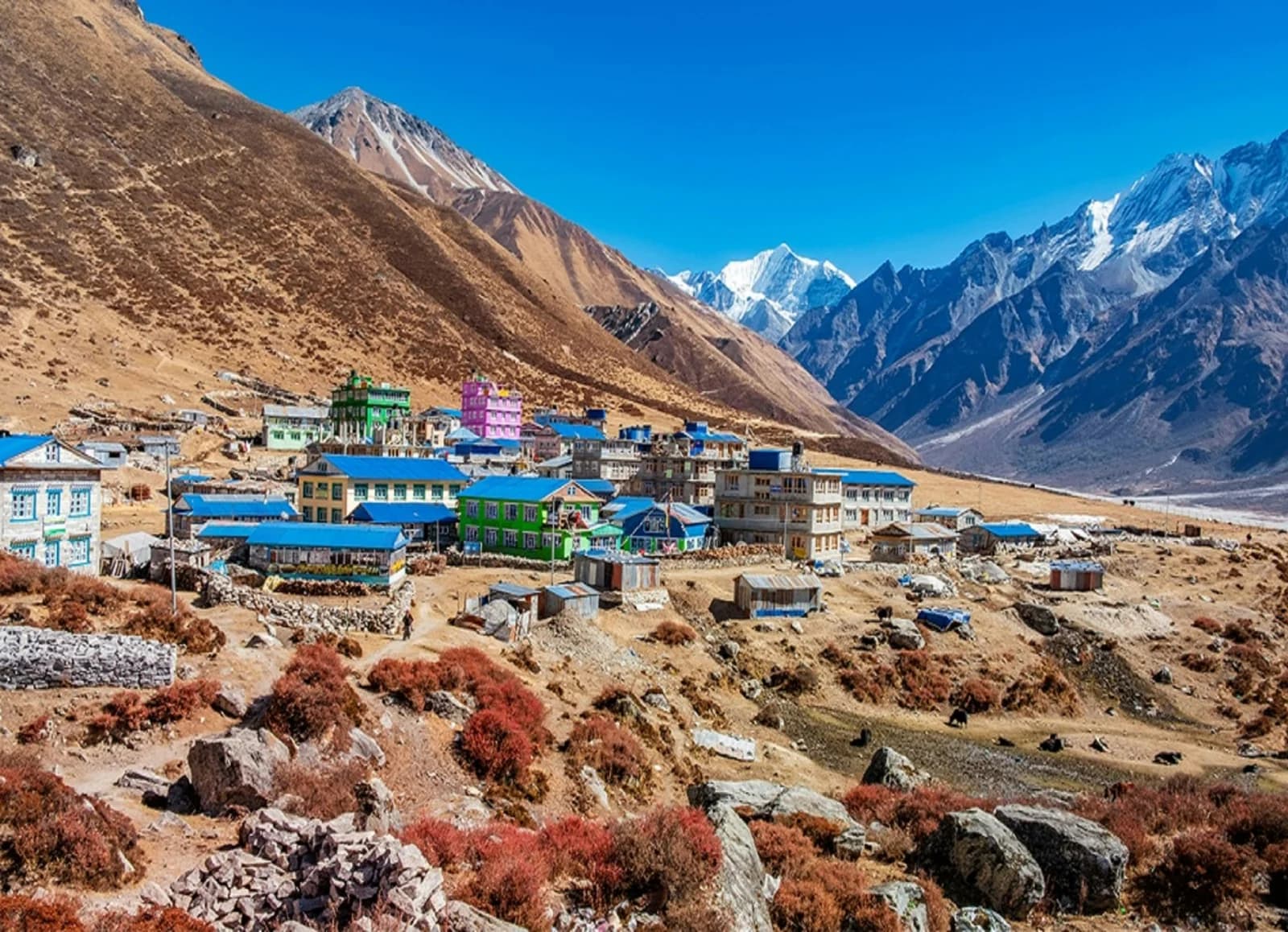
A short day past prayer walls and chortens to Kyanjin Gompa, the last settlement in the valley. Arriving by midday leaves the afternoon to rest, which matters before the climbs ahead.
- Day 5
Acclimatisation climb of Kyanjin Ri
Climb the grassy ridge north of the village to the top of Kyanjin Ri (about 4,773 m) and return to Kyanjin for the night. This climb high, sleep low day prepares you for Tserko Ri.
- Day 6
Summit of Tserko Ri
Start before dawn and climb across moraine and steep, loose slopes to the summit of Tserko Ri (about 4,984 m), then descend the same way to Kyanjin. It is the longest and hardest day of the trek, and your guide may turn back if the weather closes in.
- Day 7
Walk towards Langshisa Kharka
An easier day following the valley floor east from Kyanjin towards the summer pastures of Langshisa Kharka and the snout of the Langtang glacier, then back. Most people turn around before Langshisa itself, as the full round trip is long.
- Day 8
Kyanjin Gompa to Lama Hotel
Retrace the route down the valley, losing height quickly. The descent makes this long day feel easier than the walk up.
- Day 9
Lama Hotel to Syabrubesi
Continue down through the forest to the road head at Syabrubesi for a last night in the lower valley.
- Day 10
Syabrubesi to Kathmandu
Drive back to Kathmandu along the same road. Allow a full day, as landslides and roadworks can slow the journey.
This trek climbs above 3,000 m, where the pace of the climb matters. See our guide to altitude sickness on Nepal treks for how to prevent, spot and respond to it.
Best time to trek
The best months for the Langtang Valley with Tserko Ri Trek are Mar–May, Oct–Nov.
- Jan
- Feb
- Mar
- Apr
- May
- Jun
- Jul
- Aug
- Sep
- Oct
- Nov
- Dec
How does it compare with other routes? See our month-by-month guide to trekking in Nepal.
Permits & costs
- Permit & park fees
- NPR 5,000 per person (≈ US$32)
- Guide day rates
- $25–$40 per day, set by the guides below
- Langtang National Park (NPR 3,000, about USD 19): covers the whole valley, including the summit day; it is checked at Dhunche as you drive towards Syabrubesi.
- TIMS card (NPR 2,000, about USD 13): issued through your registered trekking agency together with a licensed guide, as the Nepal Tourism Board requires on the Langtang route.
- Tserko Ri itself: no climbing permit is needed; it is a trekking summit inside the national park, reached on foot from Kyanjin Gompa.
- Fees change; confirm current rates before you travel.
Every fee and rule, trek by trek: our guide to Nepal trekking permits. Which routes need a licensed guide: do you need a guide to trek in Nepal? What a day rate covers, tips and flights: how much a trekking guide costs in Nepal.
Getting there & back
Road update, October 2026: floods on 26 August swept away the road bridges at Betrawati and Syabrubesi. Jeeps have crossed a temporary bridge at Betrawati since 11 October, but Syabrubesi is still cut off by road, so treks currently start from Dhunche or Thulo Syabru and join the usual trail at Bamboo or Lama Hotel after about two days of walking. The trekking agencies' association reported the upper Langtang valley and Kyanjin safe for trekking. Confirm the current way in with your guide before you arrange transport.
You leave Kathmandu for Syabrubesi, a 7–9 hour jeep or bus journey north through Trishuli Bazaar and Dhunche on a narrow road that slides badly after rain. Because the summit day near 5,000 m depends on weather, it pays to keep an extra day before your flight home as well as one at the start. The return follows the same road back from Syabrubesi.
📸 Trail Checkpoints & Scenery Gallery

Langtang Valley with Tserko Ri Trek FAQs
How hard is the climb to Tserko Ri?
Tserko Ri needs no ropes or climbing equipment, but it is a demanding day: more than 1,100 m of ascent from Kyanjin Gompa on steep, loose ground, and the same descent. Expect 8–9 hours round trip. If you have walked at altitude before and are fit for long hill days, it is achievable.
Why spend three nights at Kyanjin Gompa?
The extra nights let your body adapt before going above 4,500 m. Climbing Kyanjin Ri first and sleeping back at Kyanjin is the standard way to prepare for Tserko Ri, and it also gives a spare day if bad weather delays the summit.
What is the difference between Kyanjin Ri and Tserko Ri?
Kyanjin Ri (about 4,773 m) is a shorter climb directly above the village, done by most Langtang trekkers. Tserko Ri (about 4,984 m) is higher and further, with wider views of the glaciers and peaks to the east and north. On this trek you do both.
How high is Tserko Ri?
Most itineraries give about 4,984 m. Some guides quote figures up to around 5,000–5,030 m because different points on the summit ridge are measured. Plan for close to 5,000 m either way.
What if the weather turns on summit day?
Your guide will set a turnaround time and may postpone or abandon the attempt in cloud, wind or snow. The spare day in this itinerary, used for the Langshisa Kharka walk, can be swapped for a second summit attempt if needed.
Do I need special gear for Tserko Ri?
Standard trekking kit is enough in spring and autumn: sturdy boots, warm layers, gloves, a hat and a headlamp for the early start. After fresh snow, microspikes help on the upper slopes; ask your guide before you set off from Kyanjin.
Can beginners do this version of the trek?
First-time trekkers are usually better suited to the standard Langtang Valley trek with just Kyanjin Ri. This version adds a long summit day near 5,000 m, so prior experience of multi-day walking at altitude is a real advantage.
Guides who lead the Langtang Valley with Tserko Ri Trek
Every one of them is licence-verified by our compliance team. Open a profile to read about them, then send your dates — they reply to you directly with their own price.