Helambu Trek at a glance
How the grades compare across routes: Nepal trek difficulty grades explained.
Overview
The Helambu Trek starts at the edge of the Kathmandu Valley and needs no flight: a short drive to Sundarijal and you are walking. The route climbs through Shivapuri-Nagarjun National Park to Chisapani, follows a long forested ridge north via Kutumsang to its high point at Tharepati, then drops into the Melamchi valley and the villages of Melamchigaon, Tarkeghyang and Sermathang before finishing at Melamchi Bazaar.
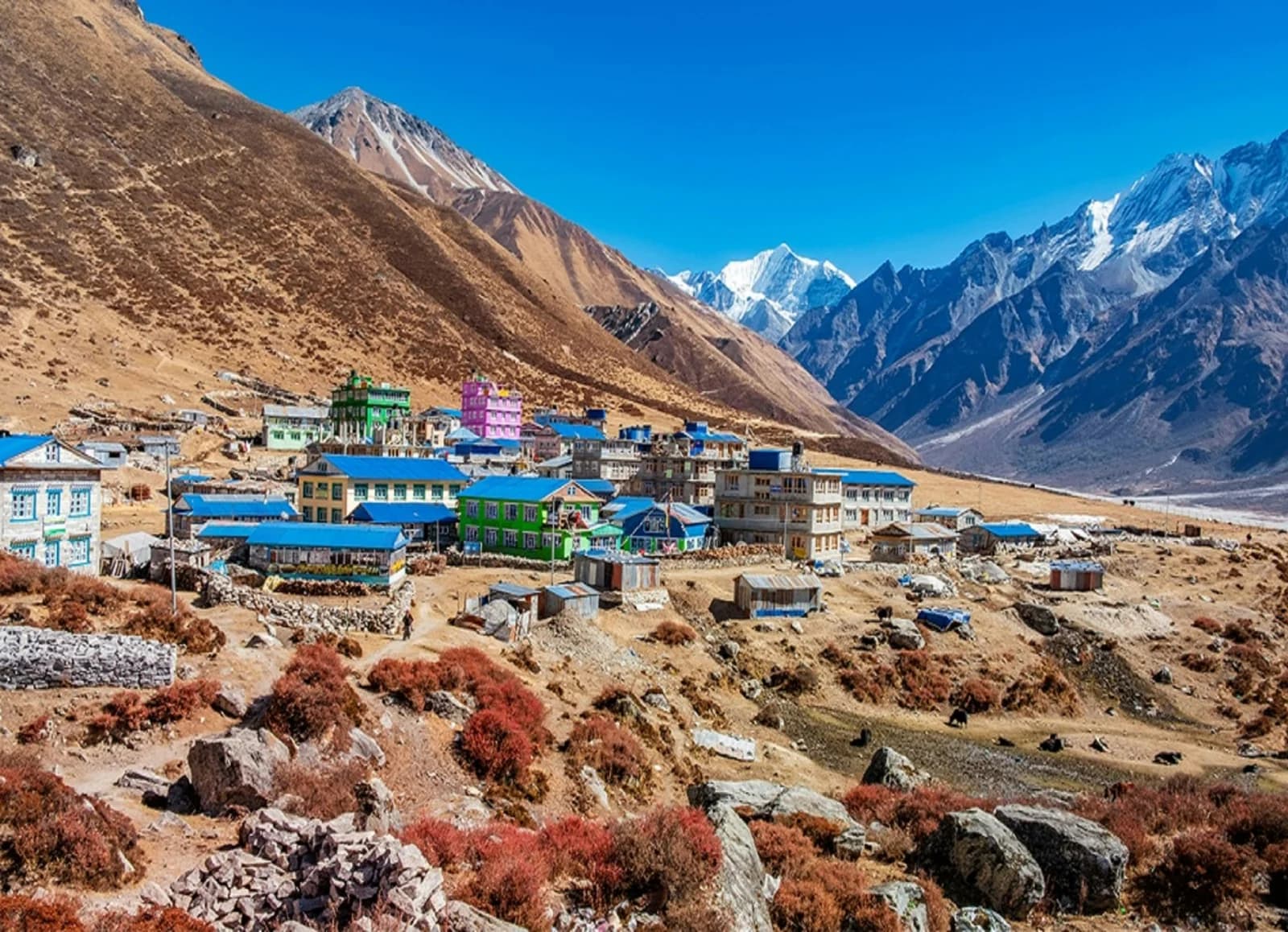
Helambu is the homeland of the Hyolmo (Yolmo) people, Tibetan Buddhist communities with their own language and some of the region's oldest monasteries, at Tarkeghyang and Melamchigaon. Their stone houses, prayer walls and apple orchards give the second half of the trek its character, and homestays are available in several villages.
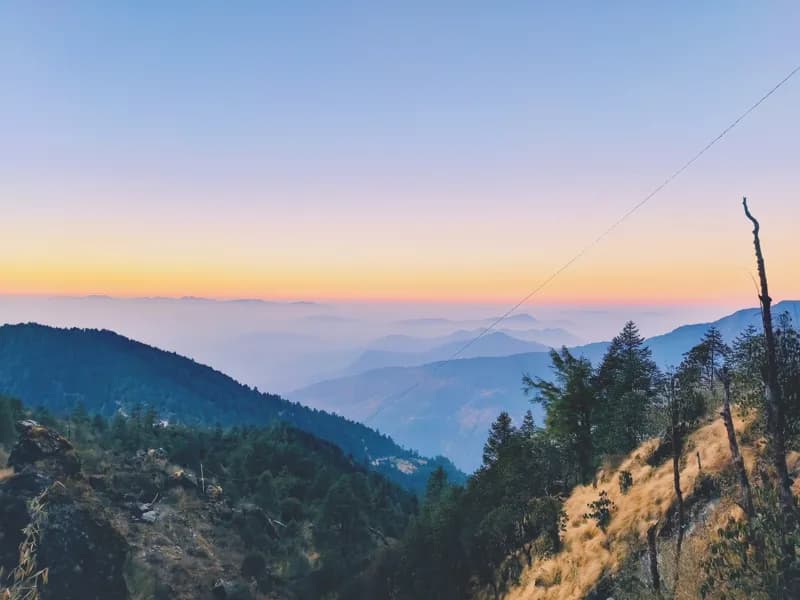
At under 3,700 m, altitude is rarely a problem, and the trek works in the shoulder months and in winter when higher routes are cold or snowbound. The trade-off is views: the Langtang, Gauri Shankar and Jugal ranges show best from the ridge around Tharepati and on clear mornings in autumn.
It suits trekkers with a week to spare, families, and anyone wanting a first teahouse trek close to Kathmandu. Licence-verified guides you contact directly can suggest how to shorten or extend the loop.
🌟 Trail Highlights
- No flights: start walking an hour from Kathmandu at Sundarijal
- Sunrise over the Langtang and Jugal ranges from Chisapani and Tharepati
- Hyolmo villages and monasteries at Melamchigaon and Tarkeghyang
- Homestays and apple orchards in the Melamchi valley
- Rhododendron and oak forest along the Kutumsang ridge
- A low-altitude trek that works from autumn through spring
Helambu Trek itinerary
- Day 1
Drive to Sundarijal, hike to Chisapani
A 45-minute drive to Sundarijal, then a climb up stone steps beside the water pipeline into Shivapuri-Nagarjun National Park, past the Tamang village of Mulkharka, to the ridge-top settlement of Chisapani.
- Day 2
Chisapani to Kutumsang
Morning views of the Himalaya, then a walk through fields and forest via Pati Bhanjyang and Gul Bhanjyang to Kutumsang, the first permanent village on the ridge.
- Day 3
Kutumsang to Tharepati
A steady climb through fir and rhododendron forest along the ridge to Tharepati, the high point of the trek, with views of Langtang, Ganesh Himal and Manaslu on clear days.
- Day 4
Tharepati to Melamchigaon
A steep descent of about 1,000 m into the Melamchi valley to Melamchigaon, a Hyolmo village with a monastery and homestays.
- Day 5
Melamchigaon to Tarkeghyang
Cross the Melamchi Khola and climb gently through terraces and villages to Tarkeghyang, the largest Hyolmo village, with one of the oldest monasteries in Helambu.
- Day 6
Tarkeghyang to Sermathang
A short, easy walk along the hillside through forest and orchards to Sermathang, with time to explore the village.
- Day 7
Sermathang to Melamchi Bazaar
A long descent through villages and terraced fields to the roadhead at Melamchi Bazaar (Melamchi Pul).
- Day 8
Drive Melamchi Bazaar to Kathmandu
A 3–4 hour drive back to Kathmandu.
This trek climbs above 3,000 m, where the pace of the climb matters. See our guide to altitude sickness on Nepal treks for how to prevent, spot and respond to it.
Best time to trek
The best months for the Helambu Trek are Mar–May, Oct–Dec.
- Jan
- Feb
- Mar
- Apr
- May
- Jun
- Jul
- Aug
- Sep
- Oct
- Nov
- Dec
How does it compare with other routes? See our month-by-month guide to trekking in Nepal.
Permits & costs
- Permit & park fees
- NPR 6,000 per person (≈ US$39)
- Guide day rates
- $25–$35 per day, set by the guides below
- Shivapuri-Nagarjun National Park (NPR 1,000, about USD 6): collected at Sundarijal, where the first morning's climb enters the park's forest on the way to Chisapani.
- Langtang National Park (NPR 3,000, about USD 19): the upper Helambu ridge around Tharepati lies inside the park, so you need its permit even though Helambu feels like village country.
- TIMS card (NPR 2,000, about USD 13): Helambu is on the Nepal Tourism Board's guide-and-TIMS list, so your registered agency arranges the card when it assigns your licensed guide.
- Park and TIMS rates are revised from time to time, so check the current figures with your agency before setting off.
Every fee and rule, trek by trek: our guide to Nepal trekking permits. Which routes need a licensed guide: do you need a guide to trek in Nepal? What a day rate covers, tips and flights: how much a trekking guide costs in Nepal.
Getting there & back
Helambu is the trek you can start from a Kathmandu taxi: Sundarijal is about 45 minutes from the city centre, so there is no flight and no long bus day. The loop finishes at Melamchi Bazaar (Melamchi Pul), 3–4 hours back to Kathmandu by bus or jeep. The Melamchi road is often damaged by monsoon floods, so check it before you go; some versions finish at Timbu or other Sindhupalchok villages instead.
📸 Trail Checkpoints & Scenery Gallery

Helambu Trek FAQs
How difficult is the Helambu Trek?
It is an easy to moderate trek. Days are 4–7 hours with plenty of stone steps and some steep descents, but the high point is only about 3,640 m. Good general fitness is enough, and it is a common first trek in Nepal.
Is altitude sickness a concern?
Rarely. Tharepati, the highest night, is around 3,640 m, so most people are fine, but drink plenty and tell your guide if you get a headache that doesn't go away. If you plan to continue to Gosainkunda from Tharepati, that route goes much higher and needs more care.
Do I need a guide?
Yes. Since 1 April 2023 foreign trekkers in Nepal's national parks must trek with a licensed guide arranged through a registered agency, and upper Helambu is inside Langtang National Park. A local guide also helps with homestays and the many trail junctions.
What permits do I need?
The Langtang National Park permit and, for the usual Sundarijal start, the Shivapuri-Nagarjun National Park fee, NPR 6,000 in total with a TIMS card (about USD 38). TIMS requirements are reported inconsistently in 2026, so confirm with your agency.
When is the best time to go?
October to December and March to May are best. Because it stays below 3,700 m, Helambu is also walkable in winter, when nights are cold but skies are often clear. The monsoon (June to September) brings leeches in the forests and landslide risk on the roads.
Who are the Hyolmo people?
The Hyolmo (or Yolmo) are the Tibetan Buddhist community of Helambu, with their own language and traditions. Villages such as Melamchigaon and Tarkeghyang have old monasteries, and several families run homestays where you can stay with them.
What is accommodation like?
A mix of simple teahouses and village homestays. Rooms are basic but clean, meals are home-cooked, and most places offer phone charging; mobile signal is available in many villages.
Guides who lead the Helambu Trek
Every one of them is licence-verified by our compliance team. Open a profile to read about them, then send your dates — they reply to you directly with their own price.