Langtang Valley Trek at a glance
How the grades compare across routes: Nepal trek difficulty grades explained.
Overview
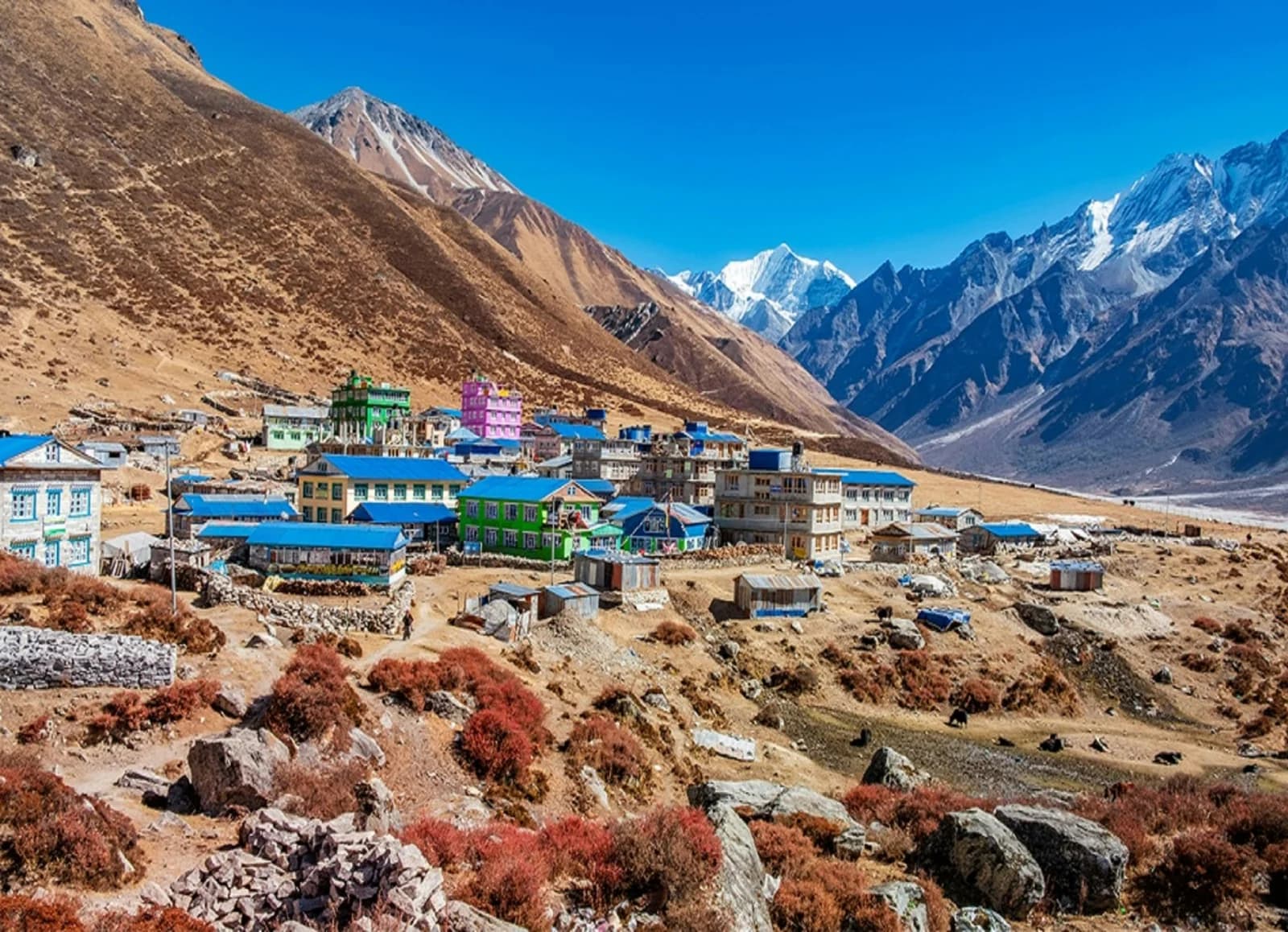
The Langtang Valley Trek is the closest major trek to Kathmandu. A day's drive north brings you to Syabrubesi, and from there the trail follows the Langtang Khola upstream through Langtang National Park to Kyanjin Gompa, a small monastery settlement surrounded by glaciers and the peaks of Langtang Lirung.
The lower valley is steep-sided and forested with oak, rhododendron and bamboo, home to langur monkeys and, more rarely, red pandas. Higher up it opens into a broad glacial valley of yak pastures, stone walls and prayer flags. The people here are largely Tamang, with strong Tibetan cultural ties, and you pass mani walls, chortens and the rebuilt village of Langtang, which was destroyed by a landslide in the 2015 earthquake. From Kyanjin Gompa most trekkers spend a day climbing Kyanjin Ri or Tserko Ri for wide views over the Langtang range.
The trek suits people with around a week who want high mountain scenery without flying in or out. The trail is steady rather than technical, with daily walking of four to seven hours, and the route out and back along the same valley keeps logistics simple. A licence-verified local guide you contact directly can arrange transport, permits and lodges and set a pace that allows for acclimatisation.
Deciding between routes? Langtang vs Poon Hill: The Best Short Trek in Nepal
🌟 Trail Highlights
- Kyanjin Gompa and its cheese factory below Langtang Lirung
- Panoramic views from Kyanjin Ri or Tserko Ri
- Tamang villages with Tibetan Buddhist culture
- Forests of Langtang National Park, home to red pandas and langurs
- Rebuilt Langtang village and its earthquake memorial
- No flights needed: the trailhead is a day's drive from Kathmandu
Langtang Valley Trek itinerary
- Day 1
Kathmandu to Syabrubesi
A long drive north via Trishuli and Dhunche, the park headquarters, brings you to Syabrubesi at the confluence of the Bhote Koshi and Langtang Khola. The road is mostly paved at first but rough and winding in the hills.
- Day 2
Syabrubesi to Lama Hotel
The trail crosses the river and climbs steadily up the Langtang Khola valley through subtropical forest, passing Bamboo and Rimche. It is a long uphill day with several sections of stone steps.
- Day 3
Lama Hotel to Langtang village
The forest gradually thins as the valley widens, and the first views of Langtang Lirung appear around Ghoda Tabela. The trail continues past yak pastures to Langtang village, rebuilt after the 2015 earthquake.
- Day 4
Langtang village to Kyanjin Gompa
A shorter walk past long mani walls and small settlements brings you to Kyanjin Gompa. The afternoon is free to visit the monastery and the cheese factory and to rest at altitude.
- Day 5
Kyanjin Ri and acclimatisation
An early climb to Kyanjin Ri gives wide views of Langtang Lirung, Gangchenpo and the surrounding glaciers. Strong walkers sometimes choose the longer and higher climb to Tserko Ri instead. You return to Kyanjin Gompa for the night.
- Day 6
Kyanjin Gompa to Lama Hotel
Retrace the valley downhill past Langtang village and Ghoda Tabela. The descent is long but easy on the lungs as you lose height.
- Day 7
Lama Hotel to Syabrubesi
The last walking day descends through forest back to Syabrubesi, with time to rest in the afternoon.
- Day 8
Syabrubesi to Kathmandu
Drive back to Kathmandu by bus or jeep. Allow a full day, as landslides and roadworks can slow the journey.
This trek climbs above 3,000 m, where the pace of the climb matters. See our guide to altitude sickness on Nepal treks for how to prevent, spot and respond to it.
Best time to trek
The best months for the Langtang Valley Trek are Mar–May, Oct–Nov.
- Jan
- Feb
- Mar
- Apr
- May
- Jun
- Jul
- Aug
- Sep
- Oct
- Nov
- Dec
How does it compare with other routes? See our month-by-month guide to trekking in Nepal.
Permits & costs
- Permit & park fees
- NPR 5,000 per person (≈ US$32)
- Guide day rates
- $25–$40 per day, set by the guides below
- Langtang National Park entry permit: NPR 3,000 (about USD 19) for foreign nationals; lower rates apply for SAARC nationals. Available at the Nepal Tourism Board office in Kathmandu or at the park entry point at Dhunche.
- TIMS card: NPR 2,000 (about USD 13). Since April 2023 it is issued through a registered trekking agency together with a licensed guide.
- Permits are checked at Dhunche and at checkposts along the trail, so carry them with your passport.
- Fees change; confirm current rates before you travel.
Every fee and rule, trek by trek: our guide to Nepal trekking permits. Which routes need a licensed guide: do you need a guide to trek in Nepal? What a day rate covers, tips and flights: how much a trekking guide costs in Nepal.
Getting there & back
Road update, October 2026: floods on 26 August swept away the road bridges at Betrawati and Syabrubesi. Jeeps have crossed a temporary bridge at Betrawati since 11 October, but Syabrubesi is still cut off by road, so treks currently start from Dhunche or Thulo Syabru and join the usual trail at Bamboo or Lama Hotel after about two days of walking. The trekking agencies' association reported the upper Langtang valley and Kyanjin safe for trekking. Confirm the current way in with your guide before you arrange transport.
Syabrubesi is about 120 km from Kathmandu but the drive takes roughly 7–9 hours by local bus, or less by private jeep. Buses leave early in the morning from Kathmandu's Machha Pokhari area. The return follows the same road; landslides are common in the monsoon, so allow a spare day in your plans.
📸 Trail Checkpoints & Scenery Gallery

Langtang Valley Trek FAQs
How difficult is the Langtang Valley Trek?
It is a moderate trek with no technical sections. Daily walking is four to seven hours, mostly uphill on the way in, including long stretches of stone steps. Walkers with good general fitness who are used to full days on their feet will manage it.
Will I get altitude sickness on the Langtang trek?
Altitude is a real consideration: Kyanjin Gompa is close to 3,900 m and Kyanjin Ri is well over 4,500 m. The standard itinerary gains height gradually and includes a day at Kyanjin Gompa for acclimatisation. Tell your guide about any symptoms, drink plenty of water, and descend if they get worse.
Do I need a guide for the Langtang Valley Trek?
Since April 2023 Nepal requires foreign trekkers in most trekking areas, including Langtang National Park, to trek with a licensed guide, and the TIMS card is issued with one. A guide also arranges transport and lodges and knows where landslides have affected the trail. We recommend hiring a licensed guide.
What permits do I need for Langtang?
You need the Langtang National Park entry permit and a TIMS card. The park permit can be bought at the Nepal Tourism Board in Kathmandu or at Dhunche on the way in; the TIMS card is arranged through a registered agency with your guide. Carry both with your passport.
When is the best time to trek in Langtang?
March to May and October to November give the most reliable weather and clearest views. Spring brings rhododendron blossom in the lower forest, and autumn is usually the clearest. Winter is cold at Kyanjin Gompa, and the June to September monsoon brings rain, leeches and landslide risk on the road.
What are the teahouses like in the Langtang Valley?
Teahouses offer simple twin rooms with shared toilets and a heated dining room. Menus are similar along the route, with dal bhat, noodles, potatoes and eggs, and yak cheese at Kyanjin Gompa. Prices rise as you go higher because supplies are carried up by porters and pack animals.
Can I combine Langtang with Gosainkunda?
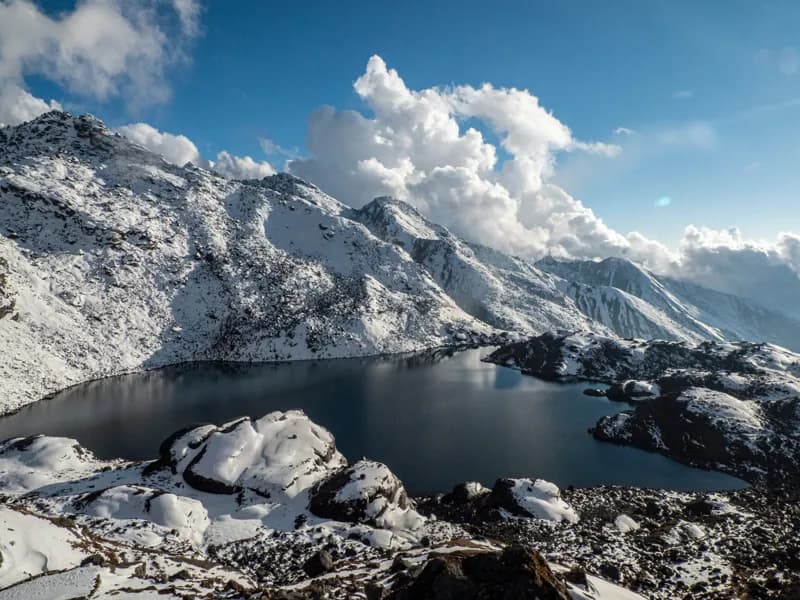
Yes. Many trekkers return from Kyanjin Gompa to Lama Hotel and then head up to the holy lakes of Gosainkunda before descending to Dhunche, which adds several days and a higher overnight stop. Discuss the extension with your guide, as it needs extra acclimatisation.
Guides who lead the Langtang Valley Trek
Every one of them is licence-verified by our compliance team. Open a profile to read about them, then send your dates — they reply to you directly with their own price.