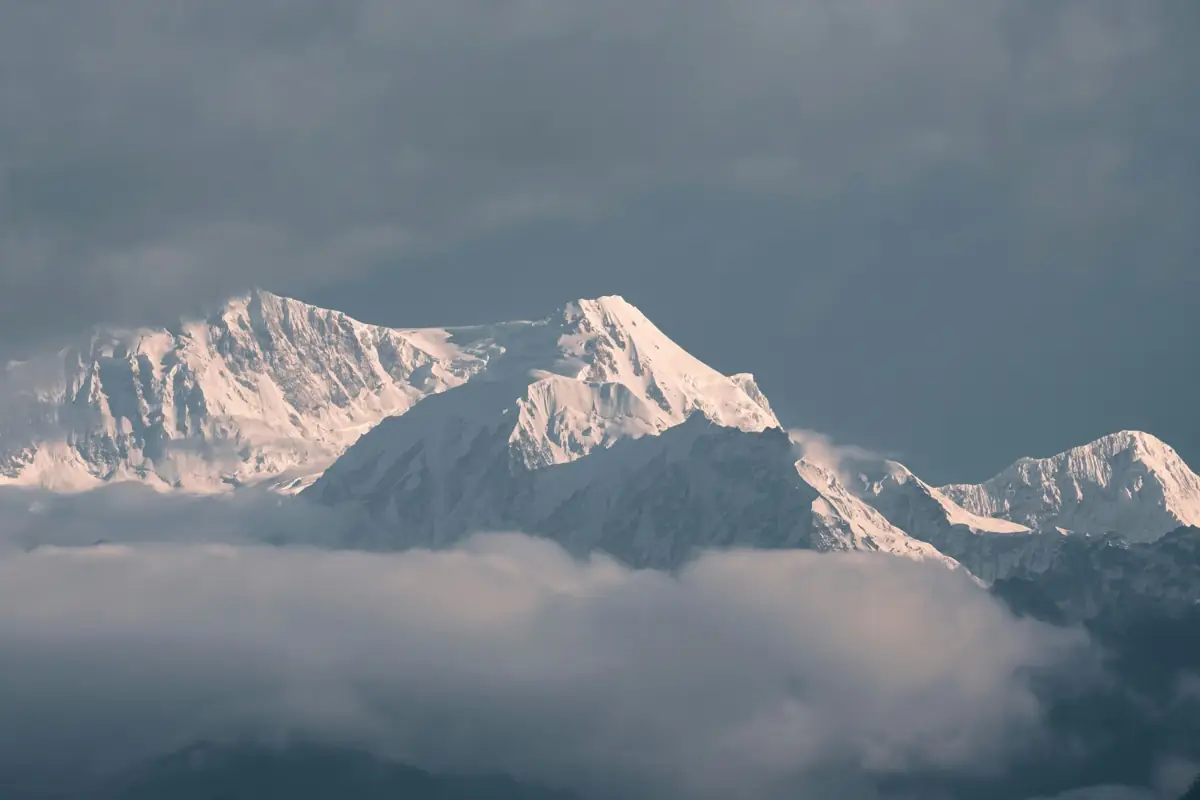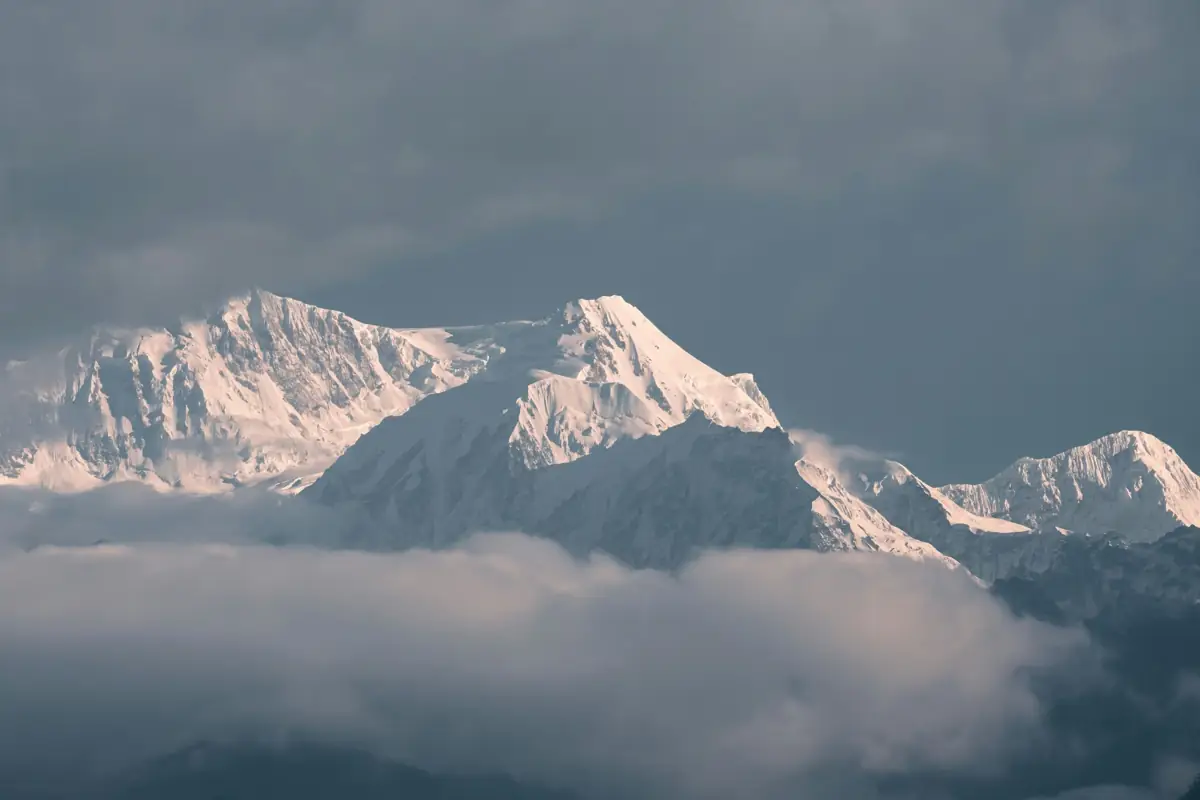
Kanchenjunga Circuit Trek at a glance
How the grades compare across routes: Nepal trek difficulty grades explained.
Overview
The Kanchenjunga Circuit is the full walking loop around the southern and western flanks of the world's third-highest mountain. Where shorter base camp itineraries use jeeps to cut the approach and exit, the circuit walks the whole way from Taplejung: up the Tamor and Ghunsa valleys to Pangpema on the north side, across the Sele La, Sinion La and Mirgin La to Oktang and the Yalung glacier on the south side, and back to Taplejung through Yamphudin and Khebang.
The extra days are what set it apart. The itinerary builds in rest and acclimatisation stops at Ghunsa and Khambachen, a full day for the walk to Pangpema and back, and a slower descent through Limbu and Rai farming villages that most base camp treks skip by road. The result is about three and a half weeks on the trail with very few other groups.
Kangchenjunga is a restricted area, so the circuit is arranged through a registered agency with a licensed guide. Lodges are simple and spread out, food is basic dal bhat and noodles above Ghunsa, and some nights may be in very rudimentary teahouses.
It suits experienced trekkers who have already done a long high-altitude route and want time and solitude rather than speed. Licence-verified guides you contact directly can explain how they pace the loop and handle the restricted-area permit.
🌟 Trail Highlights
- Walking the full loop from Taplejung and back, with no jeep shortcuts
- Pangpema, the north base camp (about 5,143 m), and the Kanchenjunga glacier
- Oktang and the Yalung glacier below the south face
- Sele La, Sinion La and Mirgin La in a single crossing day
- Rest days in Tibetan-influenced Ghunsa and below Jannu at Khambachen
- Limbu and Rai villages on the long descent through Yamphudin and Khebang
Kanchenjunga Circuit Trek itinerary
- Day 1
Fly Kathmandu to Bhadrapur, drive to Ilam
A short flight to Bhadrapur in the eastern lowlands, then a 4–5 hour drive into the tea hills of Ilam. Overnight in a hotel.
- Day 2
Drive Ilam to Taplejung
A long, winding drive north along ridges and river valleys to Taplejung, the district headquarters, where permits are checked and the walking begins.
- Day 3
Taplejung to Chiruwa
The trail drops to the Tamor river and follows it upstream through terraced villages and cardamom groves to the small settlement of Chiruwa.
- Day 4
Chiruwa to Lelep
Continue up the Tamor past the Taplethok checkpoint, crossing side streams on suspension bridges, to the village of Lelep at the entrance to the conservation area's upper valleys.
- Day 5
Lelep to Amjilosa
The valley narrows and the trail climbs steeply in places above the Ghunsa Khola gorge. Amjilosa is a handful of lodges perched above the river.
- Day 6
Amjilosa to Gyabla
Bamboo and rhododendron forest, waterfalls and a steady climb lead to Gyabla, a small Tibetan-influenced settlement.
- Day 7
Gyabla to Ghunsa
The forest opens into a wide valley of prayer flags and fields. Ghunsa is the largest village on the route, with a monastery and the last reliable supplies.
- Day 8
Rest and acclimatisation in Ghunsa
A rest day before the high ground. A short walk above the village helps acclimatisation and gives views up the valley.
- Day 9
Ghunsa to Khambachen
The trail follows the river past a landslide section and a scree slope, opening onto the yak pastures of Khambachen with Jannu (Kumbhakarna) towering above.
- Day 10
Acclimatisation day at Khambachen
A second rest day, with an optional hike towards the Jannu viewpoint above the settlement before going higher.
- Day 11
Khambachen to Lhonak
Moraine and open meadows lead past Ramtang to Lhonak, a cluster of stone huts on a wide glacial plain ringed by peaks.
- Day 12
Day trip to Pangpema and back to Lhonak
Follow the moraine of the Kanchenjunga glacier to Pangpema, the north base camp, for close views of the north face, then return to Lhonak for the night.
- Day 13
Lhonak to Ghunsa
Retrace the route down valley, losing height quickly, back to the comfort of Ghunsa.
- Day 14
Ghunsa to Sele Le
A steep climb through forest above Ghunsa to the high camp of Sele Le (Selele Kharka) below the passes.
- Day 15
Cross Sinion La and Mirgin La to Cheram
The longest day: an early start crosses a series of passes (Sele La, Sinion La and Mirgin La) with views of Jannu and Makalu, before descending to Cheram (Tseram).
- Day 16
Cheram to Ramche
A gentle walk up the Yalung valley beside the glacier's moraine to the yak pastures of Ramche.
- Day 17
Day trip to Oktang, return to Cheram
Walk up the moraine to Oktang for views of Kangchenjunga's south face and the Yalung glacier, then descend back to Cheram.
- Day 18
Cheram to Tortong
The descent begins through forest to Tortong, a small clearing by the river.
- Day 19
Tortong to Yamphudin
A climb over a ridge and a long descent through rhododendron forest to the farming village of Yamphudin.
- Day 20
Yamphudin to Khebang
Cross the Dhupi Bhanjyang ridge and descend through Limbu villages and terraces to Khebang.
- Day 21
Khebang to Taplejung
A final day of ups and downs through villages and fields back to Taplejung, closing the loop.
- Day 22
Drive Taplejung to Bhadrapur
A full day's drive back down to the lowlands, overnight near Bhadrapur.
- Day 23
Fly Bhadrapur to Kathmandu
Morning flight back to Kathmandu.
This trek climbs above 3,000 m, where the pace of the climb matters. See our guide to altitude sickness on Nepal treks for how to prevent, spot and respond to it.
Best time to trek
The best months for the Kanchenjunga Circuit Trek are Mar–May, Oct–Nov.
- Jan
- Feb
- Mar
- Apr
- May
- Jun
- Jul
- Aug
- Sep
- Oct
- Nov
- Dec
How does it compare with other routes? See our month-by-month guide to trekking in Nepal.
Permits & costs
- Permit & park fees
- US$80 + NPR 4,000 per person (≈ US$106 in total)
- Area
- Restricted: a special permit is required
- Guide day rates
- $30–$40 per day, set by the guides below
- Restricted-area permit (Taplejung): USD 20 per person per week for the first four weeks, then USD 25 per week. This 23-day loop is costed at four weeks, USD 80; a slower pace that runs past four weeks adds USD 25 for each extra week.
- Kanchenjunga Conservation Area Permit: NPR 2,000 (about USD 13). It is the same fee whether you visit one base camp or both.
- TIMS card: NPR 2,000 (about USD 13), bought by your agency together with the licensed guide.
- The restricted permit can only be applied for by a registered trekking agency, through the Department of Immigration, and a licensed guide must walk with you. Since 22 March 2026 one trekker can apply alone; before that the minimum was two.
- Keep the permits with your passport for the whole loop, from the walk-in at Chiruwa to the walk-out through Yamphudin and Khebang.
- Fees change; confirm current rates before you travel.
Every fee and rule, trek by trek: our guide to Nepal trekking permits. Which routes need a licensed guide: do you need a guide to trek in Nepal? What a day rate covers, tips and flights: how much a trekking guide costs in Nepal.
Getting there & back
This itinerary begins with the 50-minute flight from Kathmandu to Bhadrapur in the eastern lowlands, then two days on the road via Ilam to Taplejung, where the walk starts. The small Suketar airstrip just above Taplejung can replace the drive when flights operate, but they run irregularly. The circuit walks all the way out, through Yamphudin and Khebang back to Taplejung, before the drive and flight home; monsoon landslides can block the road at either end, so keep a reserve day for each.
📸 Trail Checkpoints & Scenery Gallery

Kanchenjunga Circuit Trek FAQs
How is the Kanchenjunga Circuit different from the Base Camp trek?
Both reach Pangpema (north) and Oktang (south), but the circuit walks the whole loop from Taplejung and back instead of using jeeps on the approach and exit, and adds rest days at Ghunsa and Khambachen. It takes about three and a half weeks against roughly three for the base camp itinerary.
How difficult is the Kanchenjunga Circuit?
It is a long, strenuous trek rather than a technical one. Expect several 6–9 hour days, a full day crossing Sele La, Sinion La and Mirgin La, and nights above 4,500 m. You should have done at least one long high-altitude trek before and be comfortable with basic lodges for weeks at a time.
Do I need a permit and a guide?
Yes on both counts. The border valleys of Taplejung are a restricted area, so a registered agency has to obtain the special permit from the Department of Immigration and a licensed guide must accompany you. Since 22 March 2026 a solo trekker can get the permit, where two were needed before. You also need the Kanchenjunga Conservation Area Permit and a TIMS card.
How much do the permits cost?
The restricted area permit is about USD 20 per person per week for the first four weeks, then USD 25 per week, and the conservation area permit is NPR 3,000. For a circuit of a little over three weeks that is about USD 80 for the restricted area permit (four weeks at USD 20) plus NPR 2,000 (about USD 13) for the conservation area permit. Fees change, so confirm current rates with your agency.
How do I avoid altitude sickness?
The itinerary includes rest days at Ghunsa (about 3,475 m) and Khambachen (about 4,050 m) before Lhonak and Pangpema, and you sleep at Lhonak rather than at the base camp. Drink plenty, ascend slowly and tell your guide about symptoms early; descending is the treatment if they get worse.
When is the best time to go?
October and November bring the clearest views and stable weather; March to May is the other main season, with rhododendrons in bloom lower down. Winter snow can close the passes, and the monsoon (June to September) brings leeches, landslides and cloud.
What is accommodation like?
Simple teahouses and lodges, further apart and more basic than on the Everest or Annapurna routes. Above Ghunsa rooms are small and food is mainly dal bhat, noodles and potatoes; carry a good sleeping bag and some snacks, and expect limited electricity and no reliable mobile signal in the upper valleys.
Guides who lead the Kanchenjunga Circuit Trek
Every one of them is licence-verified by our compliance team. Open a profile to read about them, then send your dates — they reply to you directly with their own price.